

Residential Landscaping Services in Richmond
From hardscapes to weekly mowing, these are the residential jobs we pass to local contractors, starting with the ones that take the most building.
Paver Patios and Walkways
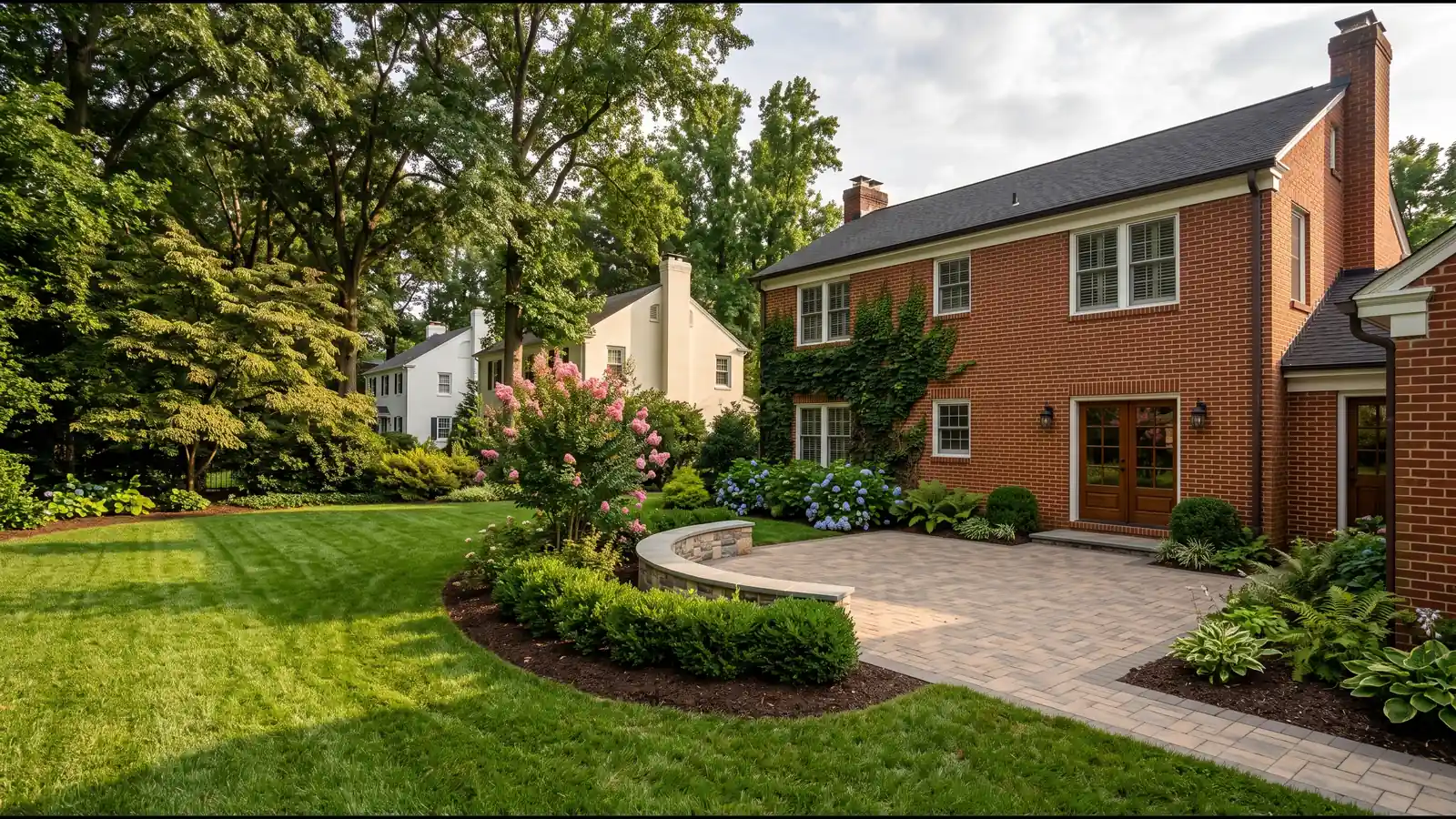
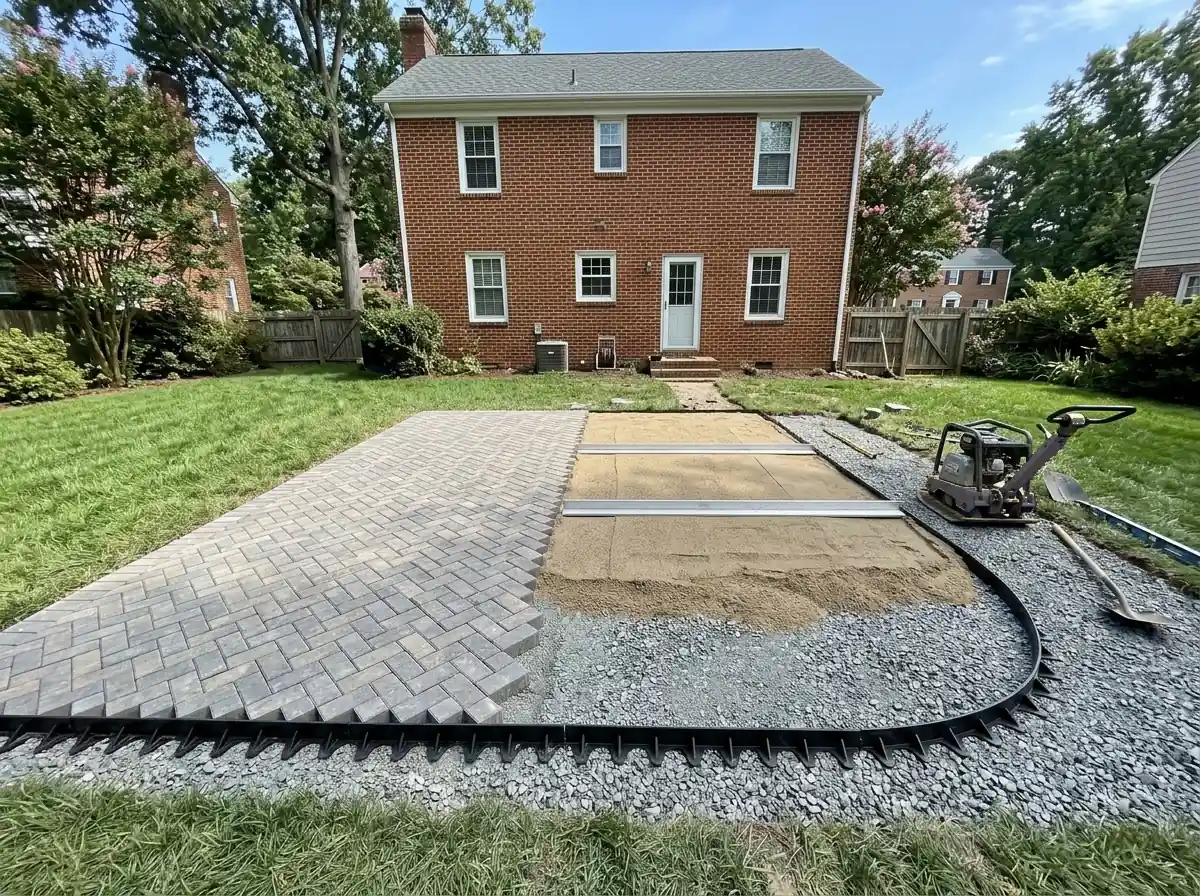
A paver patio lasts as long as what's under it. The installer digs out the soil, lays a compacted crushed-stone base (at least 4 inches under a patio, 6 under a driveway, and more on wet clay), screeds about an inch of loose bedding sand over it and sets the pavers. Natural flagstone and bluestone cost more and look it. An edge restraint spiked along the border keeps the field from creeping, and polymeric sand swept into the joints locks it and slows weeds.
Walkways follow the same build at a narrower width. Where water pools after a storm, permeable pavers let it drain through open joints into a deeper stone base instead of running off.
Retaining Walls
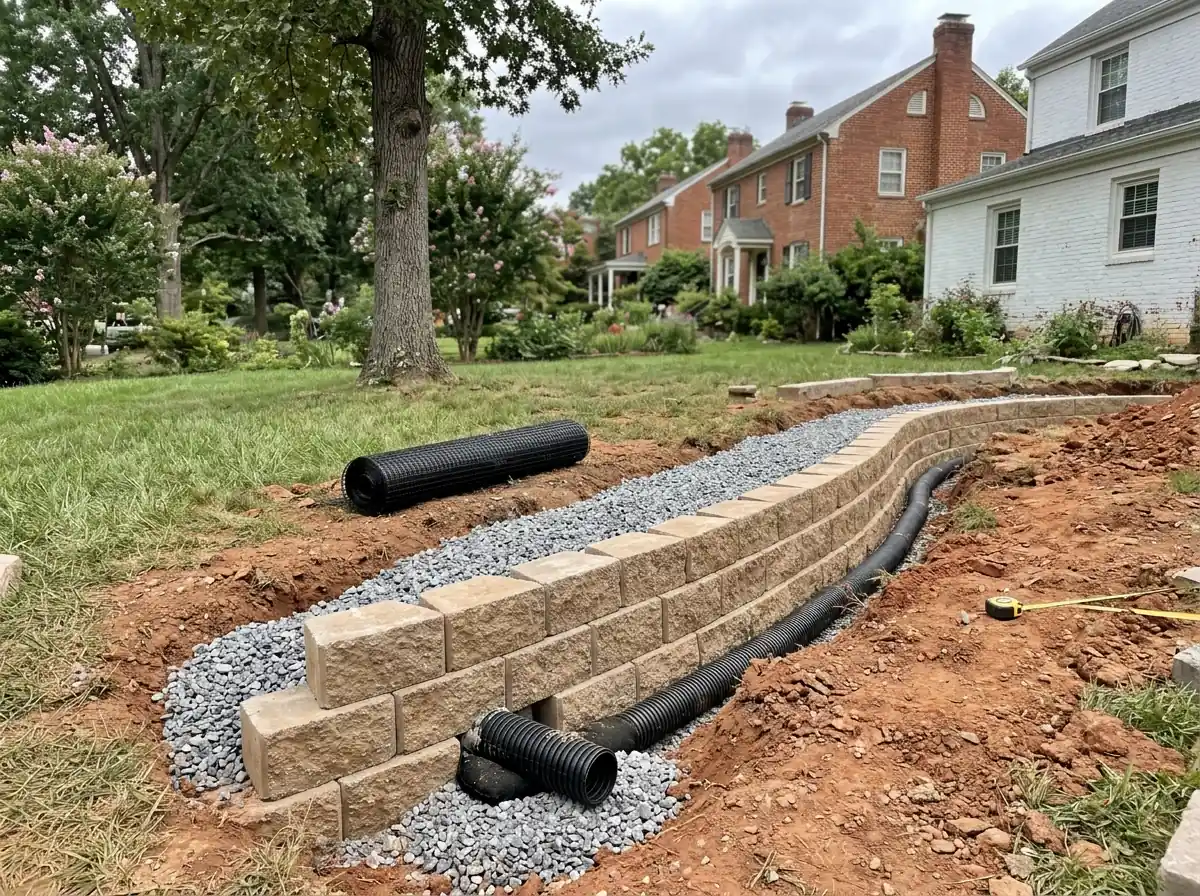
Retaining walls fail from water, not weight. A segmental block wall sits on a compacted gravel leveling pad, each course steps back slightly into the hill, and clean gravel goes behind the block with a perforated drain pipe at the base to carry water out. Taller walls get layers of geogrid reaching back into the soil. Natural stone and timber walls work for low garden terraces. Under Virginia's building code, a wall holding back less than 3 feet of soil doesn't need a building permit. At 3 feet and up, it does.
Landscape Design and Installation
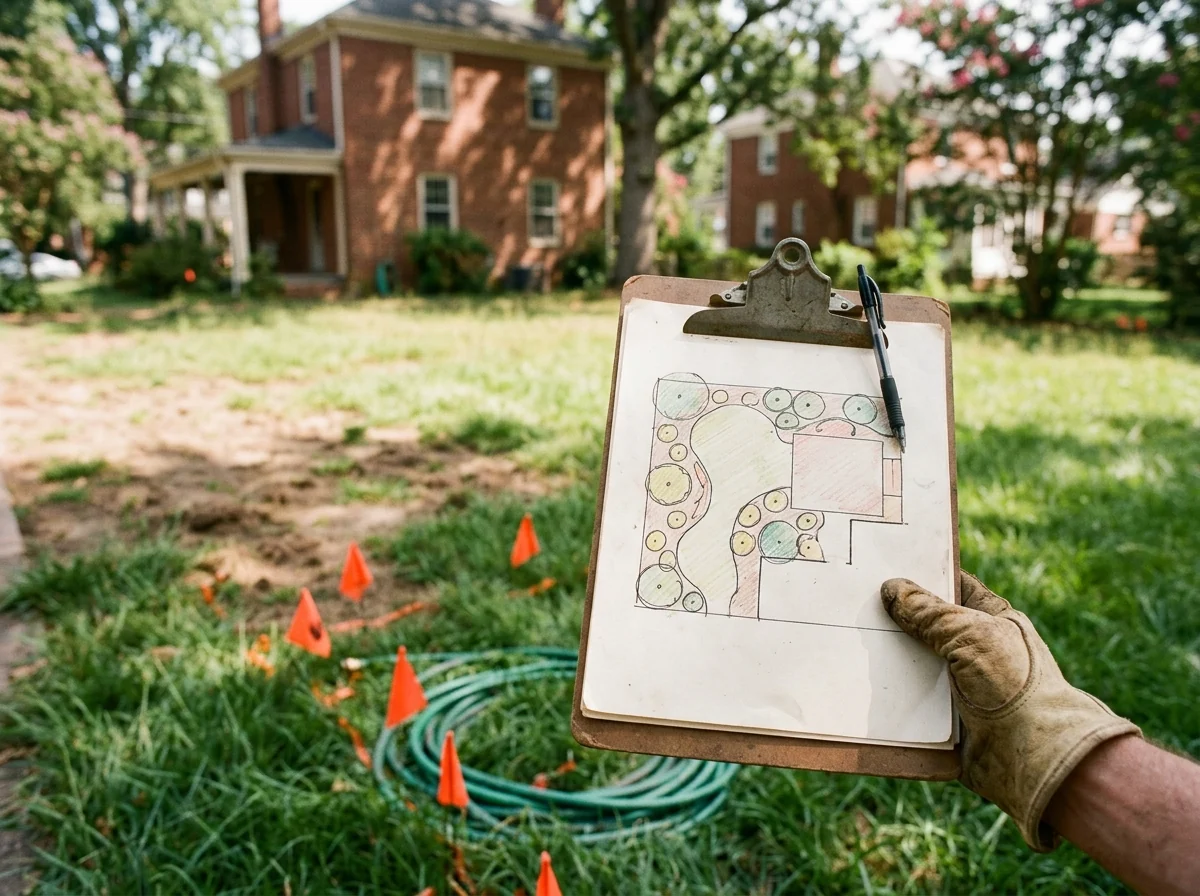
A landscape design starts with a site visit: sun and shade through the day, where water goes, what's worth keeping. From there the designer draws a scaled plan with bed lines, the patio or path, and a plant schedule listing each species, its size and spacing. Laying a garden hose along the new bed lines before anyone digs is the cheapest way to see a curve in real life.
A landscape designer plans gardens and yards. A landscape architect is a separate profession licensed by Virginia's DPOR board, and only licensed practitioners may use the title. For a planting plan, a designer is usually enough. Big plans can be built in phases: hardscape and drainage first, planting second.
Drainage Solutions and French Drains
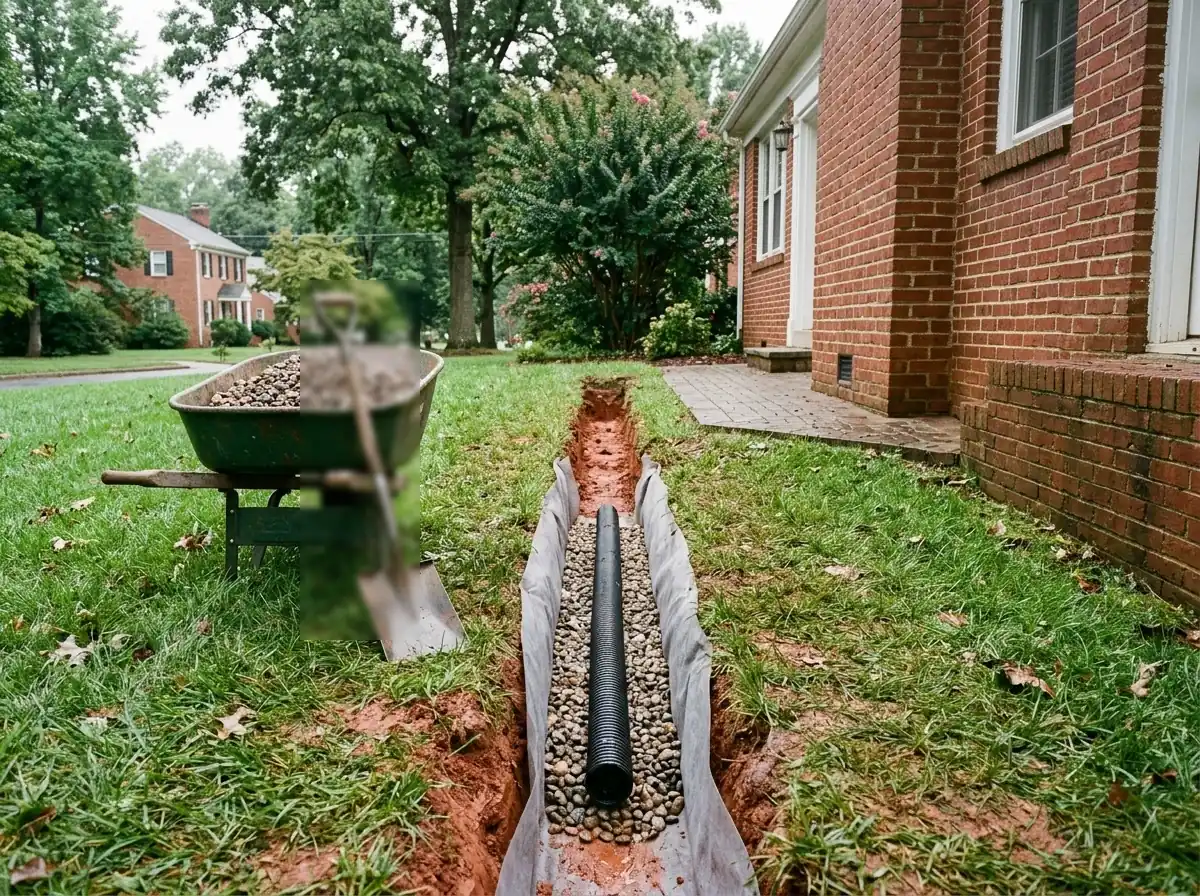
Clay soil holds water, and the western half of Richmond sits on red clay subsoil, so soggy spots there tend to stay soggy. A French drain is a gravel trench wrapped in filter fabric around a perforated pipe, sloped to carry water to a spot where it can leave the yard. Other fixes are simpler: extending downspouts several feet away from the house, regrading so soil falls away from the foundation, a catch basin at a low spot, or a dry creek bed of river rock that moves water and looks like it belongs.
Irrigation and Sprinkler Systems
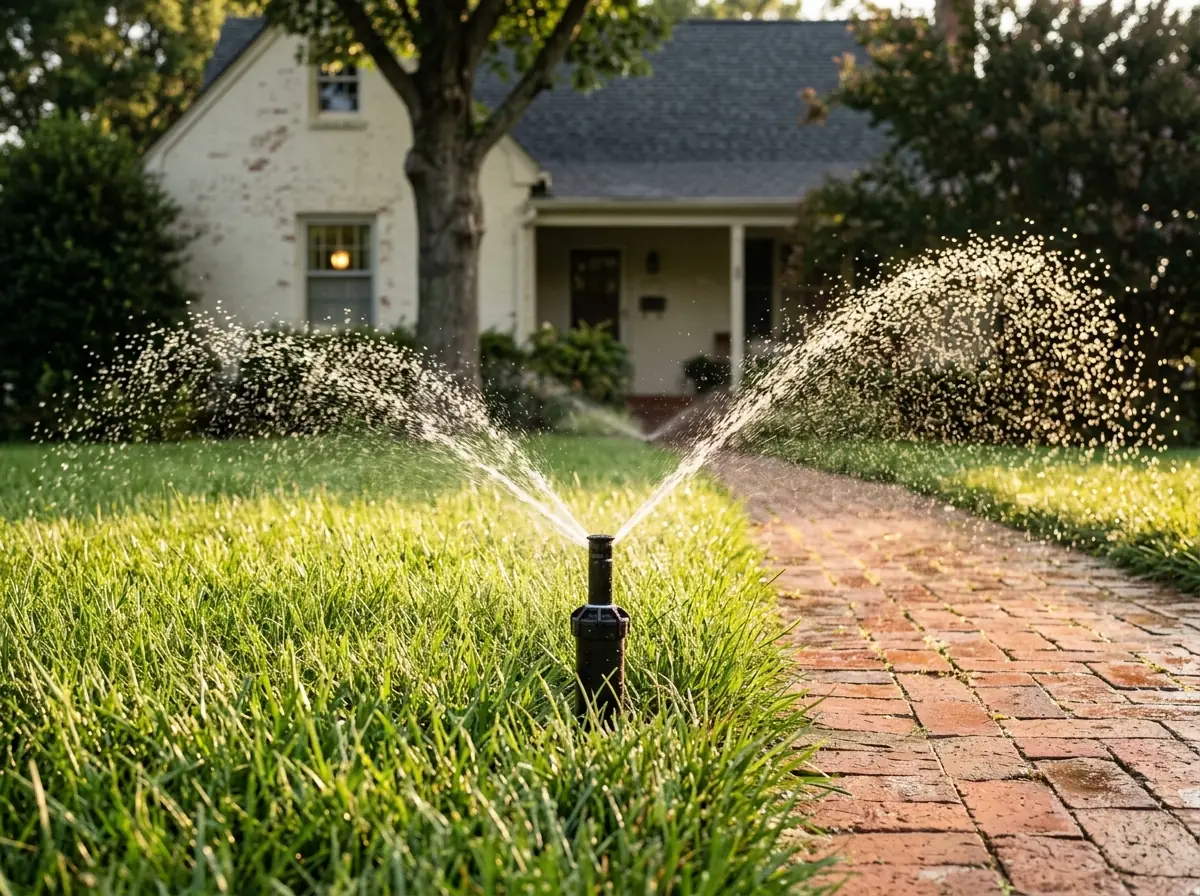
An irrigation system splits the yard into zones: rotors or spray heads for lawn, drip line for beds, each on its own valve so turf and shrubs get different amounts of water. A smart controller adjusts run times to the weather, and a rain sensor stops it watering during a storm. Virginia's waterworks rules require a backflow preventer on lawn irrigation systems, so sprinkler water can't be pulled back into the drinking supply. Installers carry a separate irrigation specialty on their Virginia contractor license. Repairs cover broken heads, leaking valves and zones that stopped firing.
Landscape Lighting
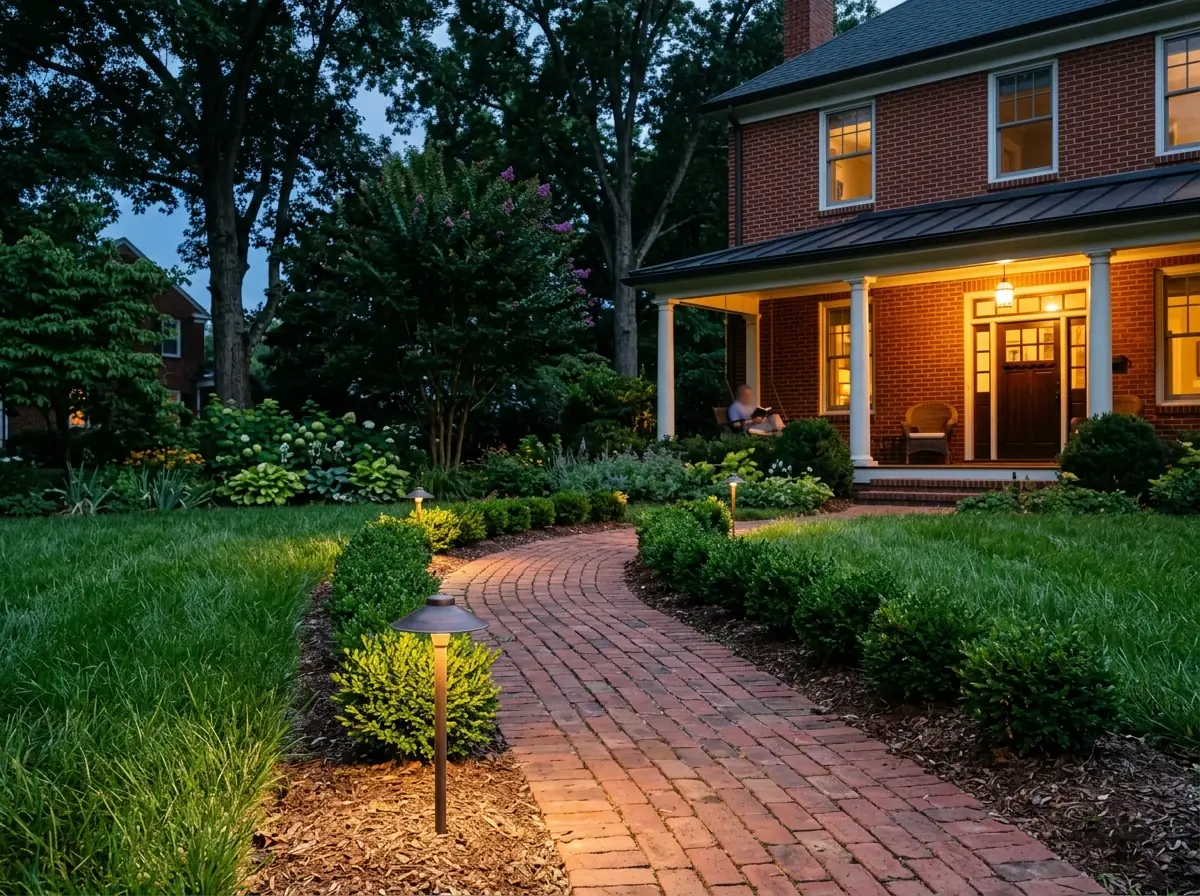
Low-voltage LED lighting runs off a transformer plugged into an outdoor outlet, with cable buried a few inches down. Path lights mark walkways and steps, uplights graze a tree trunk or the brick front of the house, and downlights hung in a tree throw a soft pool of light across a patio. A timer or photocell switches it all on at dusk.
Sod Installation and Seeding
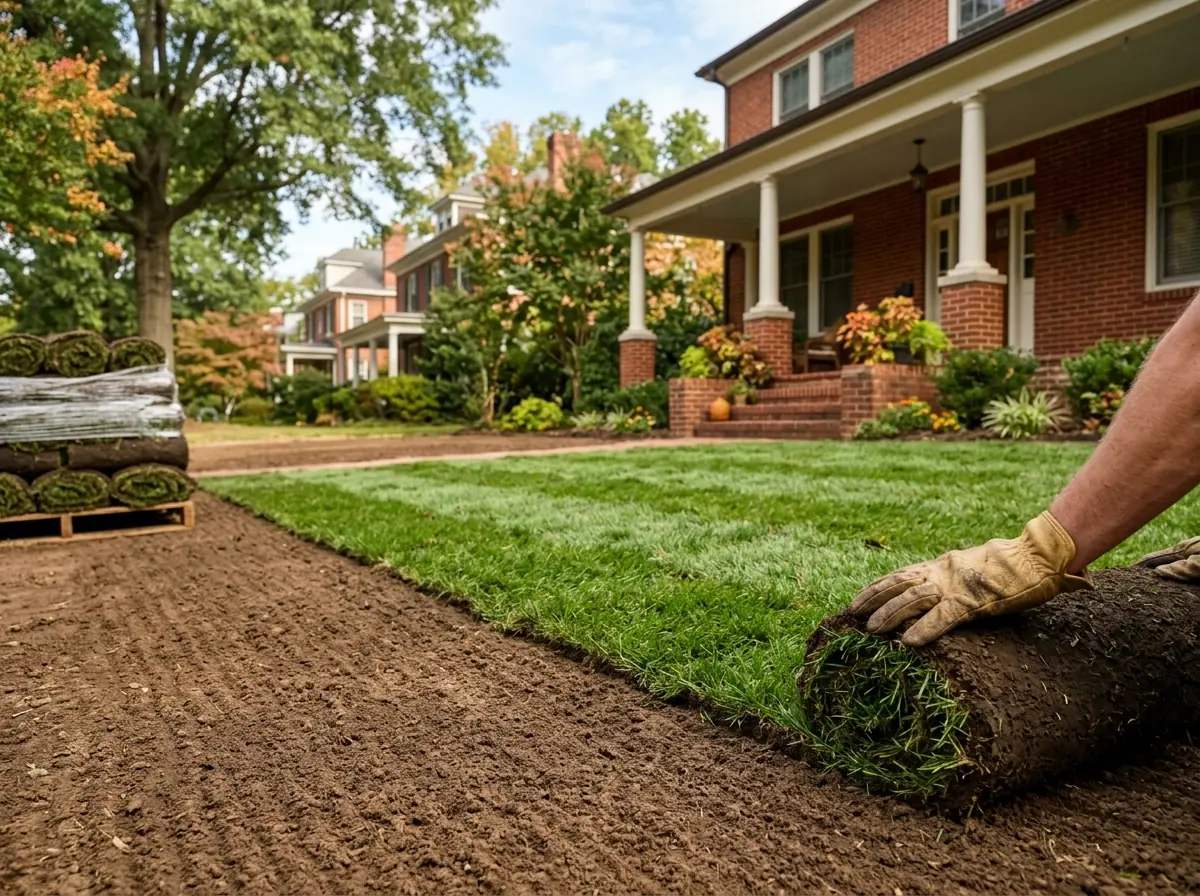
Tall fescue, a cool-season grass, is a common pick here for sun and part shade. Sod gives you a finished lawn the same day; seed costs far less and takes a season. Hydroseeding sprays seed, mulch and fertilizer in one slurry, which suits slopes and big areas. Whichever you pick, the job starts with a soil test so lime and fertilizer match what the ground needs, then grading and raking the soil smooth. The Virginia Tech routine soil test costs $10.
Lawn Aeration and Overseeding
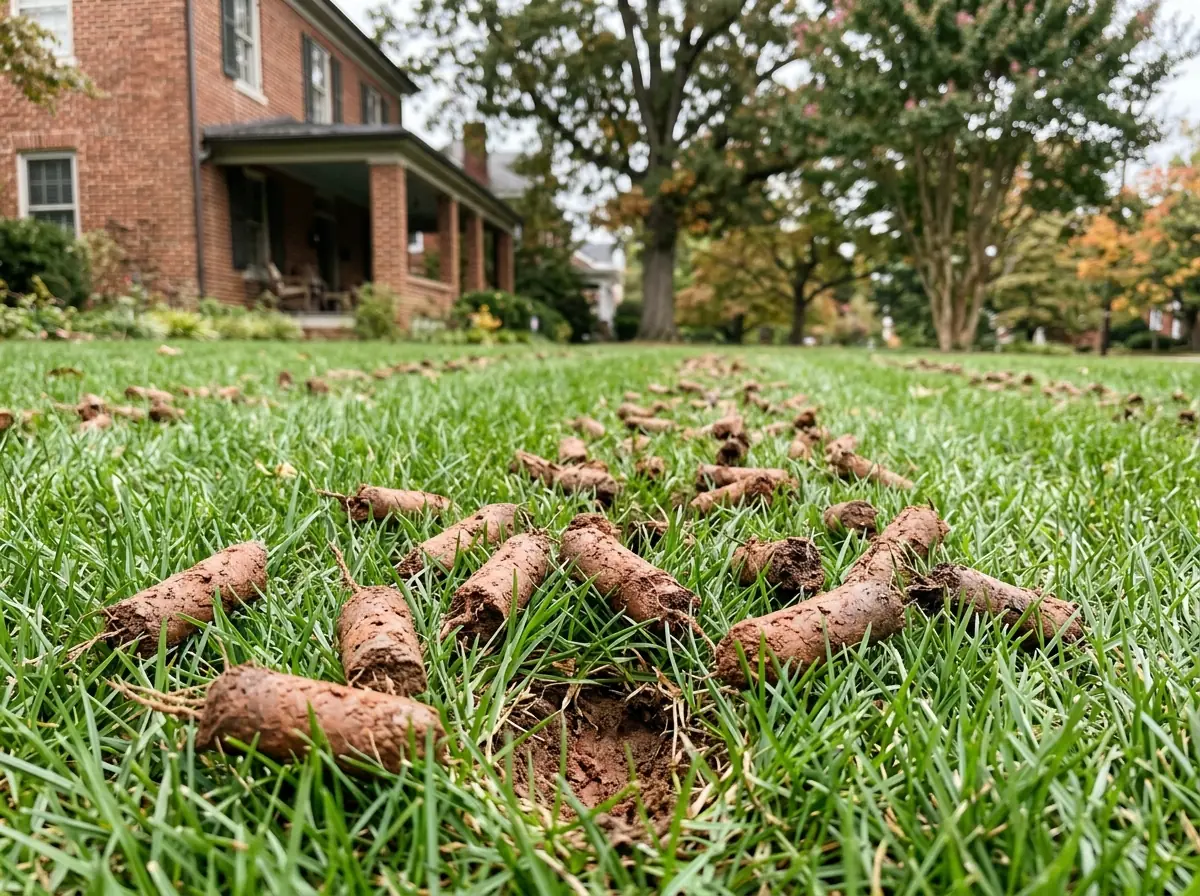
Core aeration pulls plugs of soil out of the lawn so air, water and seed reach the roots. Compacted clay benefits most. Overseeding right after aeration fills thin spots while the holes are still open. Both belong in early fall, the seeding window covered below.
Lawn Care and Mowing
Regular mowing keeps fescue thick enough to shade out weeds, as long as the mower stays high. Extension recommends 3 inches for tall fescue, and never removing more than a third of the blade in one cut. A lawn care visit covers mowing, string-trimming, edging along walks and beds, and blowing clippings off hard surfaces. Fertilizer and weed control follow the soil test, not a one-size program.
Planting, Mulch and Garden Beds
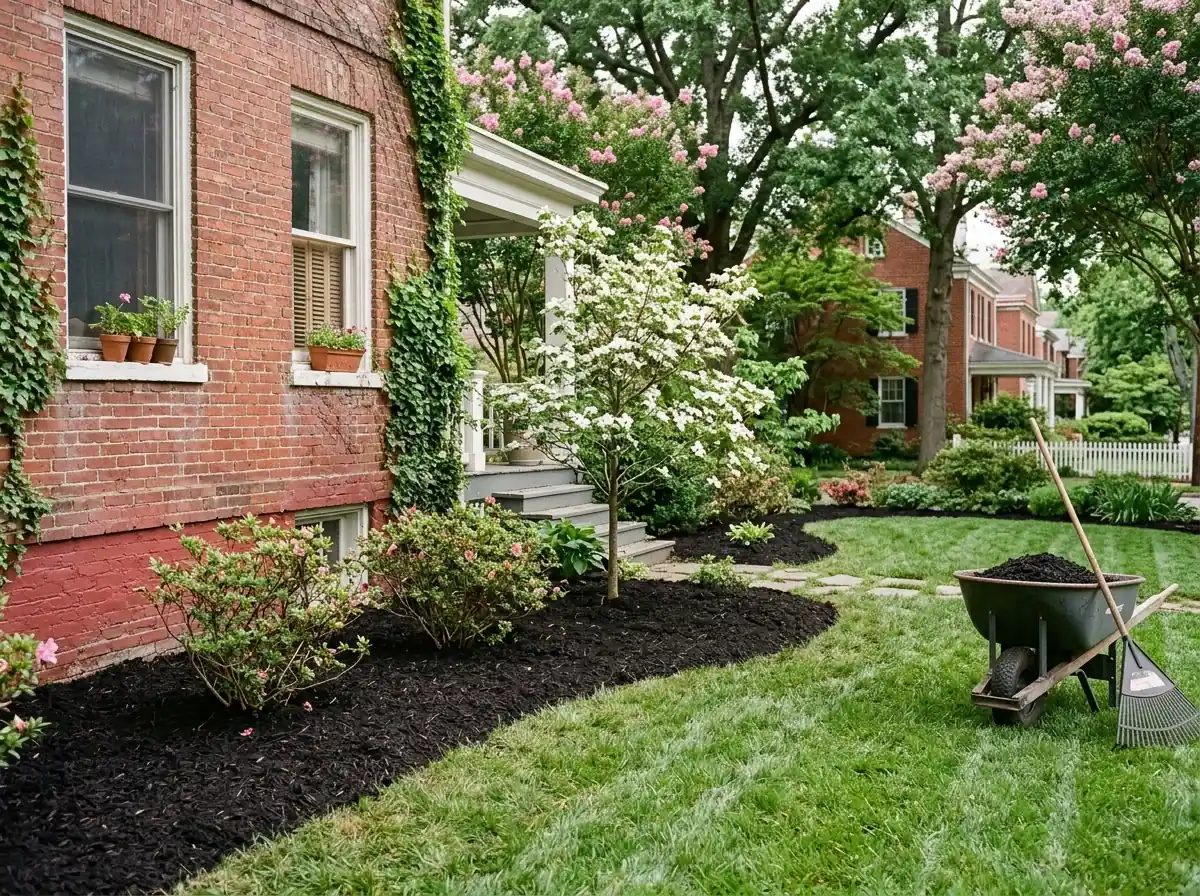
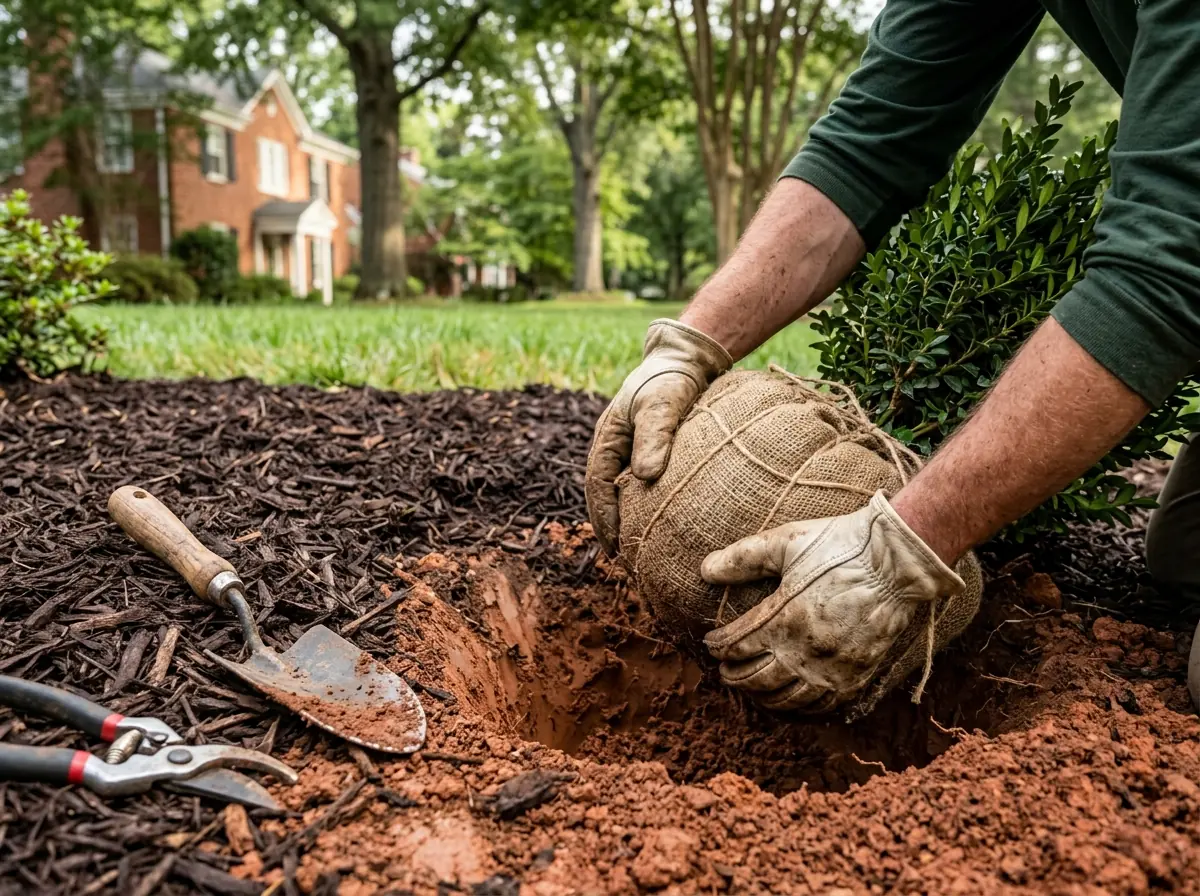
New beds get cut with a clean edge, the soil loosened and amended, then planted: shade trees, flowering trees, evergreen shrubs, perennials and ground covers. Mulch goes on last: 2 to 3 inches, pulled back about an inch from trunks and stems, never piled into a cone against a tree. Plant RVA Natives, a regional campaign, lists natives that suit a Richmond garden if you want a lower-maintenance bed that feeds pollinators.
Shrub and Hedge Trimming
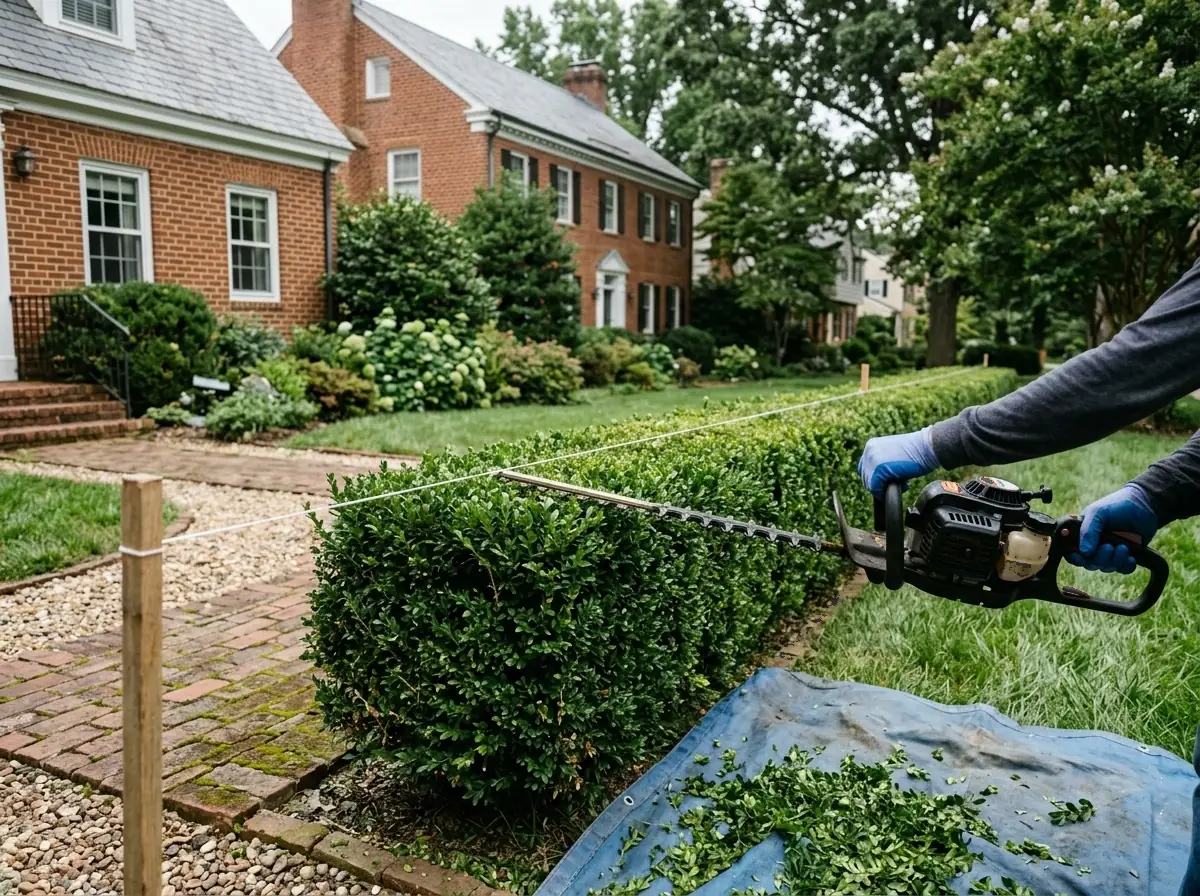
Azaleas, forsythia and other spring bloomers flower on last season's wood, so they're trimmed right after they bloom; cut them in fall and you cut off next spring's flowers. Boxwood and holly hedges take a shaping in late spring and again in summer. Crape myrtles shouldn't be topped. Virginia Cooperative Extension calls cutting them back to stubs "crape murder" and an unacceptable practice.
Seasonal Yard Cleanup and Leaf Removal
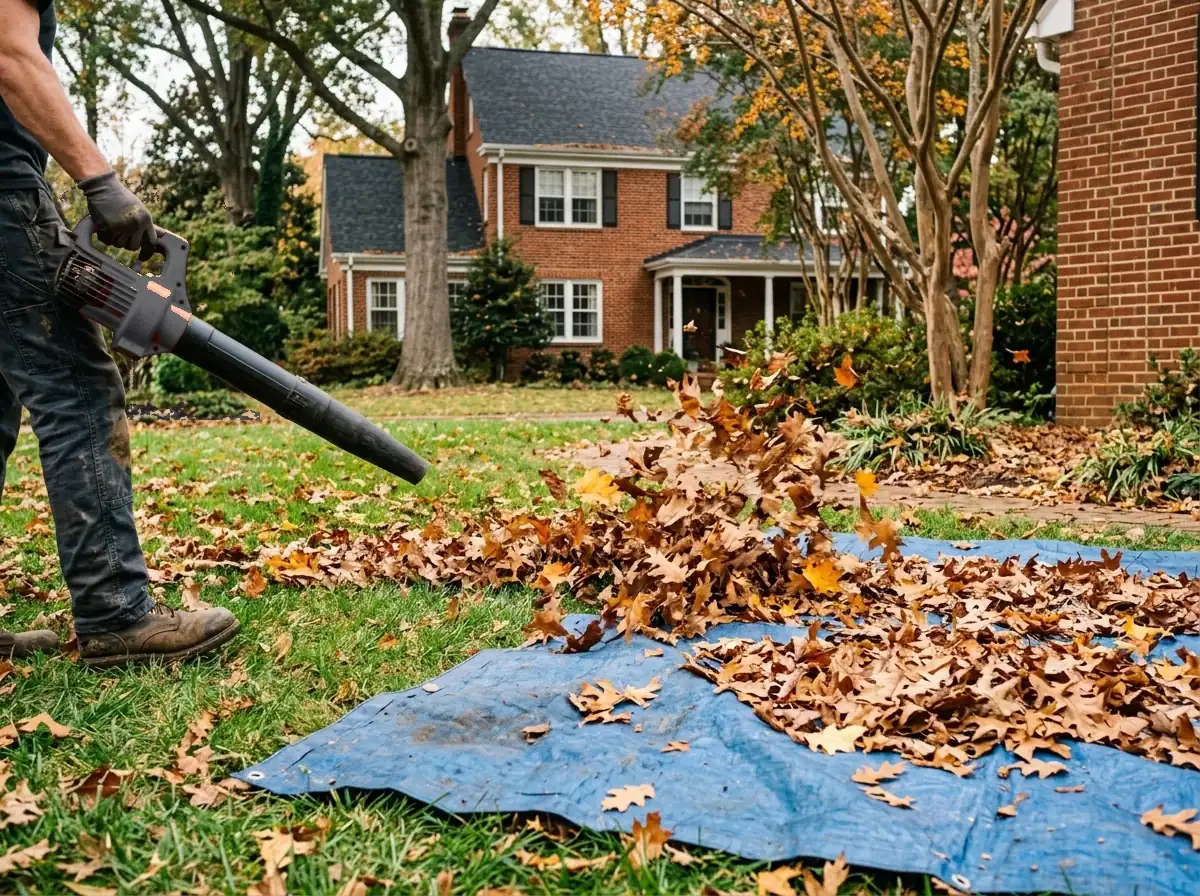
Spring cleanup clears winter debris, cuts back perennials and ornamental grasses, edges the beds and refreshes the mulch. Fall cleanup is mostly leaves. Leaves left matted on fescue through winter smother it, so they come off before they pack down.
Get a free landscaping estimate in Richmond
- Free on-site estimate
- Scope, materials and price in writing before work starts
- Utility lines marked through VA 811 before digging
- One local landscaping contractor, not a call list
- No charge to homeowners for the referral
Specialty Landscaping Services
Some projects fall between a landscaper and another trade, like gas, electric or stormwater.
Outdoor Kitchens, Fire Pits and Pergolas
Outdoor kitchens are usually a block or stone island faced to match the patio, with a grill insert and counter. Gas lines and electrical circuits go to licensed plumbers and electricians. A fire pit ring of wall block sits on the patio base, away from the house and overhanging branches. Pergolas give a patio some shade without a roof.
Rain Gardens and Stormwater Features
A rain garden is a shallow planted basin that catches roof or driveway runoff and lets it soak in over a day or two, planted with species that tolerate both wet feet and dry spells. In Richmond it can also lower your bill. The city's stormwater credit program for single-family homes takes 20% off the stormwater fee for each approved measure, up to 50%. The measures are a rain garden, rain barrels or a cistern, pervious pavement and a vegetated filter strip, each with sizing rules in the city's credit manual. Credits last three years.
Native and Low-Water Planting
Native shrubs and perennials, once established, need less water and fertilizer than a lawn. What to leave out matters as much: Virginia's invasive plant list includes English ivy, callery (Bradford) pear and Japanese barberry, and from January 2027 state law requires stores selling listed invasives to post signs saying so.
Grading and Erosion Control
Regrading sets the soil so it falls away from the foundation. On slopes, erosion control blankets, seed and planted ground covers hold soil until roots take over. Large regrading jobs can need a city land-disturbance permit (see below).
Landscape Edging and Curbing
Steel edging gives a crisp, nearly invisible line between lawn and bed. Stone or brick edging adds a border you can see, and poured concrete curbing makes a permanent mowing strip.
Artificial Turf
Synthetic turf goes over a compacted stone base with a perforated backing so rain drains through. It suits shady, heavy-traffic spots where fescue won't hold, and dog runs. It also gets hot to the touch in full summer sun, and Richmond's normal July high is about 90°F.
Commercial Landscaping in Richmond
Property managers and boards need the same work on a schedule and under a contract. We also pass commercial requests to local contractors, for properties like these.
HOAs and Community Associations
Common-area mowing, entrance beds and signs, seasonal color, retention pond edges and a written schedule the board can hold the contractor to.
Office and Retail Properties
Parking-lot islands, clean bed edges, trimmed shrubs clear of sightlines and signs, and leaf and litter pickup.
Apartments and Multifamily
Weekly mowing through the growing season, turnover cleanups, mulch refreshes and drainage fixes where downspouts flood walkways.
Things to Know Before Landscaping in Richmond
Richmond Sits on the Fall Line
The Fall Line, where the Piedmont meets the Coastal Plain, crosses the James at Richmond near Belle Isle. West of it, soils have red clay subsoil that drains slowly and packs hard. East of it, they sit on sandier Coastal Plain deposits that drain fast and dry out. Two yards a few miles apart can need different drainage, amendments and plant choices, so a contractor should dig a test hole before quoting.
Seed Cool-Season Lawns in the Fall
Richmond is USDA hardiness zone 7b, in the transition zone between cool- and warm-season grasses. Virginia Cooperative Extension puts the best window for cool-season seed at late summer to mid-fall, with September and October preferred. In our view, spring seeding is the more common mistake: young grass meets a Richmond summer with shallow roots.
Call VA 811 Before Anyone Digs
Virginia law requires a locate request to VA 811 before any excavation, patio base and fence posts included, and a 48-hour wait from 7 a.m. the next working day while utilities mark their lines. VA 811 tells homeowners to call three days ahead.
Retaining Walls and Permits
Walls holding back less than 3 feet of soil are exempt from a building permit under the state code; walls 3 feet and taller need one. For anything with a footing, NOAA puts Richmond's frost depth at 18 inches, and the permit office sets the required depth.
Contractor Licensing in Virginia
Virginia requires a DPOR contractor license for construction work over $1,000. A Class C license covers single jobs up to $30,000, Class B up to $150,000, and Class A anything larger. The Landscape Service specialty covers grading and landscape retaining walls, Masonry covers mortarless units like pavers, and Irrigation covers sprinkler systems. You can look up a license number on DPOR's website.
Chesapeake Bay Rules and Land Disturbance
Richmond runs its own Chesapeake Bay Act program. The city requires an erosion and stormwater permit when a job disturbs 4,000 square feet or more, or 2,500 square feet inside a Chesapeake Bay Preservation Area. A small patio won't reach that, but a full backyard regrade can.
Landscaping Cost in Richmond: What Changes the Price
Landscaping cost depends on what's built, how much soil moves and the materials. We haven't found Richmond-specific figures. HomeGuide's national averages put a paver patio at $10 to $17 per square foot installed and a retaining wall at $35 to $65 per square foot of wall face. Richmond quotes vary with access, slope and clay.
Paver patios
$10 to $17 per square foot. Natural stone, curves, steps and seat walls push it up.Retaining walls
$35 to $65 per square foot of face. Height, drainage and geogrid drive the price.French drains
$10 to $35 per linear foot outdoors. Depth, rock and distance to an outlet matter most.Landscape design
$700 to $3,000 for a plan, or $50 to $150 an hour.Lawn mowing
$30 to $85 per visit for an eighth- to quarter-acre yard (a page last updated in 2023). Lot size, slope, gates and frequency set the rate.
All figures above are HomeGuide national averages, not Richmond quotes.
Access and soil
A backyard reached only through a gate means hand-carrying stone. Heavy clay takes longer to dig and more base to fix.
A Richmond Landscaping Calendar
Late winter
Prune summer-blooming shrubs, plan spring projects and book hardscape work.Spring
The median last freeze at Richmond's airport is April 3, so tender annuals wait until after that. Cleanup, mulch, planting, and pre-emergent weed control for crabgrass.Summer
Mow high, water deeply and less often, and build patios and walls while the ground is dry.Fall
Aerate and overseed fescue, plant trees and shrubs, and clear leaves before they mat.
How a Landscaping Referral Works
- 1
Tell Us About the Yard
Use the form or call. Say what you want done, roughly how big the area is, and when you'd like it finished.
- 2
On-Site Visit
We pass your request to a local landscaping contractor, who contacts you to set up a visit, walk the property and measure.
- 3
Written Estimate
Ask for the scope, materials, plant list and price in writing before anything starts. With that on paper you can compare two quotes line by line.
- 4
Utility Marking and Installation
The contractor requests VA 811 utility marking and waits for the lines to be marked before digging starts.
- 5
Walkthrough
Walk the finished job with the contractor, ask for watering instructions for new plants or sod, and check it against the written scope.
Why Use Richmond Elite Landscaping
One Contractor per Request
We pass each request to one local landscaping contractor. Your phone number isn't sold to a list of companies.
Questions Worth Asking
Base depth under the pavers, drainage behind the wall, whether they've tested the soil: this page gives you the numbers to check a quote against.
No Fee for Homeowners
You pay the contractor for the work. The referral itself is free.
Landscaping Service Area in Richmond
Richmond Elite Landscaping takes requests from across the city of Richmond, from the Fan and the Museum District to Church Hill, Northside, Westover Hills and Forest Hill. If you're not sure whether your address is covered, send the form and we'll tell you.