
Garden Bed Services
Mulch Installation
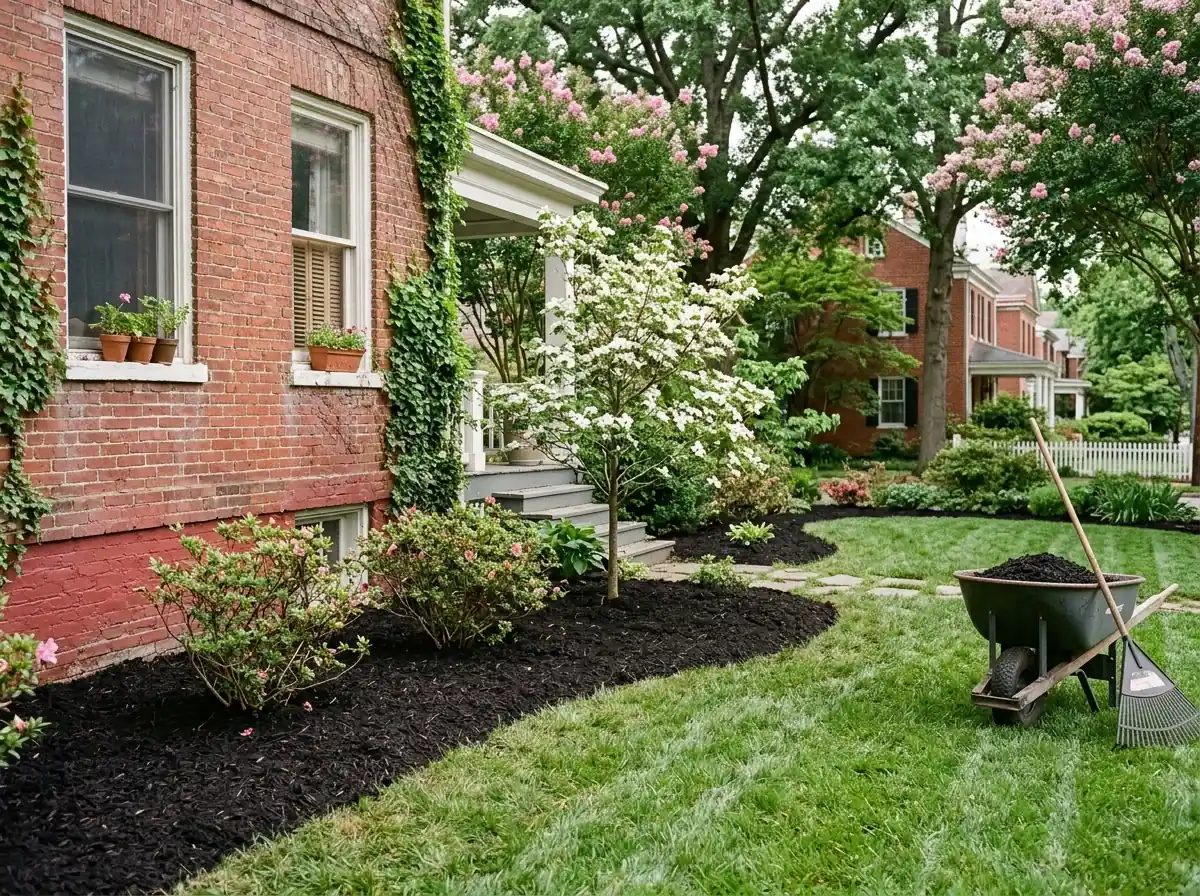
Mulch keeps soil moist, holds down weeds and evens out soil temperature. Virginia Cooperative Extension recommends 2 to 3 inches, spread evenly and pulled back about an inch from trunks and stems, and never built up past about 4 inches over years of topping up. Shredded hardwood and pine bark are the common choices; pine straw is lighter, stays on slopes and suits azaleas and other acid-loving shrubs. Around a tree in the lawn, a mulch ring reaching 3 to 6 feet out from the trunk keeps mowers and string trimmers off the trunk.
A mulching visit usually includes weeding, re-cutting bed edges, and raking out old mulch that has packed down before the new layer goes on.
Tree and Shrub Planting
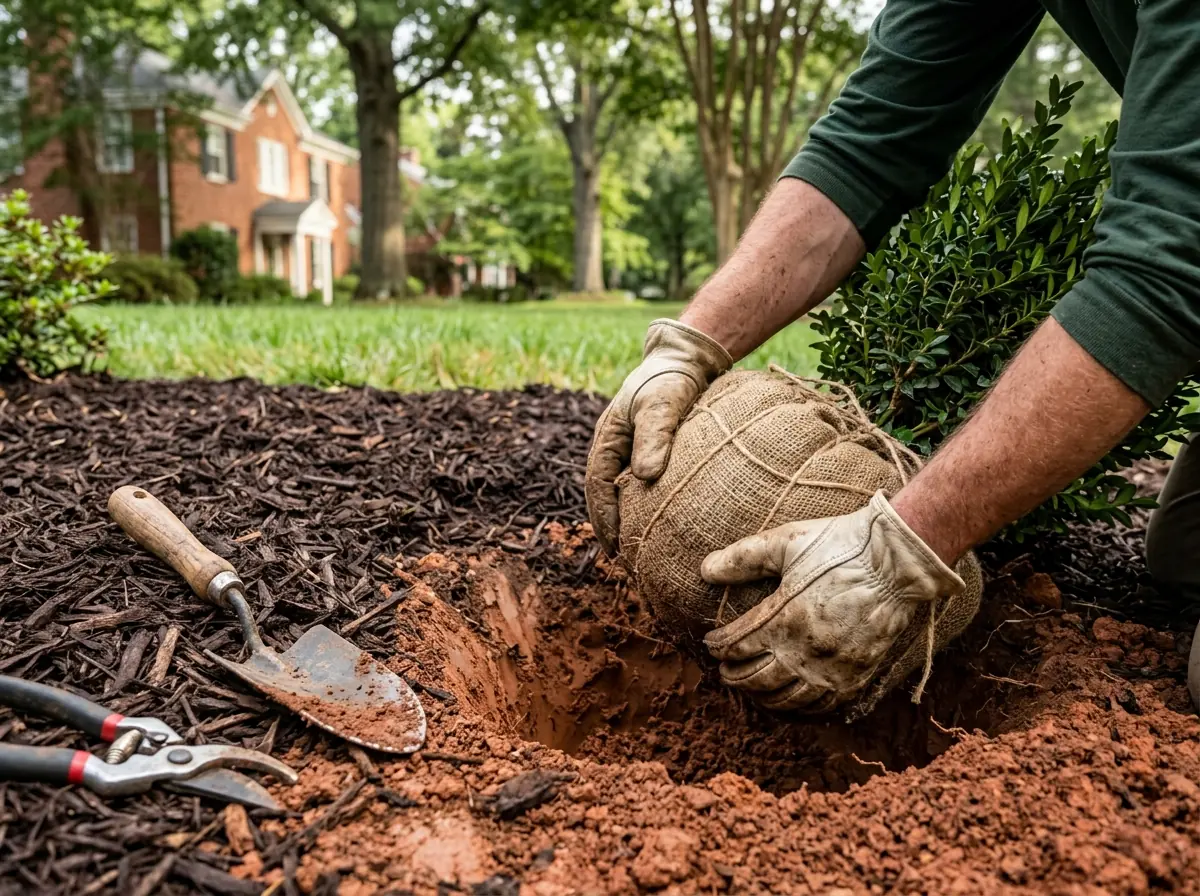
Virginia Cooperative Extension names spring and fall as the best seasons for planting container-grown shrubs, and roots keep establishing through the dormant months while the top waits for spring. Container and balled-and-burlapped trees can go in any time the ground isn't frozen, except in very hot weather. The hole is dug wide and never deeper than the root ball, so the plant doesn't settle below grade. For balled-and-burlapped plants, Extension says to cut the wrapping away or drop it to the bottom of the hole and remove the top 8 to 12 inches of any wire basket. Container plants with circling roots get teased or cut apart before planting.
Perennial and Flower Beds
New beds start by stripping turf, loosening the soil and working in compost across the whole bed, not just in each hole. Perennials go in at the spacing on the plant tag for their mature size, which looks sparse in year one and full by year three. Plant RVA Natives, a regional campaign, promotes plants native to the Richmond area and is a sensible place to start a plant list. Our guide to Virginia native plants for Richmond yards sorts them by sun, shade and wet clay. Richmond's median last spring freeze is April 3, which means about half of years still see a freeze after that date, so tender annuals are safer planted later in April.
Bed Edging
A clean bed edge keeps mulch in, grass out, and gives the mower and string trimmer a line to follow. The cheapest is a hand-cut spade edge, re-cut once or twice a year. Steel edging gives a thin, permanent line that's nearly invisible. Stone, brick or poured concrete curbing adds a border you can see and a strip for the mower wheel.
Invasive Plant Removal
English ivy climbing trees, callery (Bradford) pear seedlings and Japanese barberry are all on Virginia's invasive plant list. Removal ranges from cutting ivy at the base of a tree to digging out shrubs and replanting the gap with natives. Replacing them matters, because bare soil fills back in with whatever seeds land there. From January 2027, a state law requires retailers who sell plants on the invasive list to post signs saying so, which makes it easier to avoid buying them back.
Why Richmond homeowners call Richmond Elite Landscaping
- Free on-site estimate
- Scope, materials and price in writing before work starts
- Utility lines marked through VA 811 before digging
- One local landscaping contractor, not a call list
- No charge to homeowners for the referral
How a Tree or Shrub Should Be Planted
- 1
Call Before Digging
Even a single tree hole needs a VA 811 locate request first. Gas, power and cable lines can cross a front yard anywhere.
- 2
Dig Wide, Not Deep
Extension's guideline is a shallow hole two to three times as wide as the root ball. In well-drained soil it's as deep as the ball; in heavy, poorly drained clay it's 1 to 2 inches shallower, so the top of the ball sits slightly above grade. A deep hole in clay acts like a bucket and holds water around the roots.
- 3
Set It on Firm Soil
The root ball sits on undisturbed soil, never on loose fill that will settle, with the point where the trunk flares out at or just above the surrounding ground.
- 4
Backfill With the Soil You Dug
Extension says to backfill with the existing, unamended soil and not to mix peat moss or other organic matter into individual planting holes. A rich pocket in a clay hole keeps roots circling inside it instead of growing out. Slow-release fertilizer in the backfill is fine if a soil test calls for it.
- 5
Mulch and Water
Two to three inches of mulch over the planting area, pulled back from the trunk, and deep watering through the first growing season.
Mulch Cost and Coverage
HomeGuide's national average for mulch with professional installation is $50 to $150 per cubic yard, against $25 to $100 for the material alone. We haven't found Richmond-specific figures. At 3 inches deep, a cubic yard covers roughly 100 square feet of bed, so measure your beds before comparing quotes: some are priced per yard, some per bed.
Many homeowners mulch in spring, after cleanup and before summer heat. Because Extension's limit is about 4 inches in total, a thin top-up over mulch that's still there is enough; raking out packed old mulch first keeps the layer from building up.
For a full bed layout and plant list before planting, see landscape design. For keeping established shrubs in shape, see shrub and hedge trimming. For plants deer rarely eat, see deer-resistant plants for Richmond, and for frost dates and what zone 7b means, see Richmond's planting zone.