
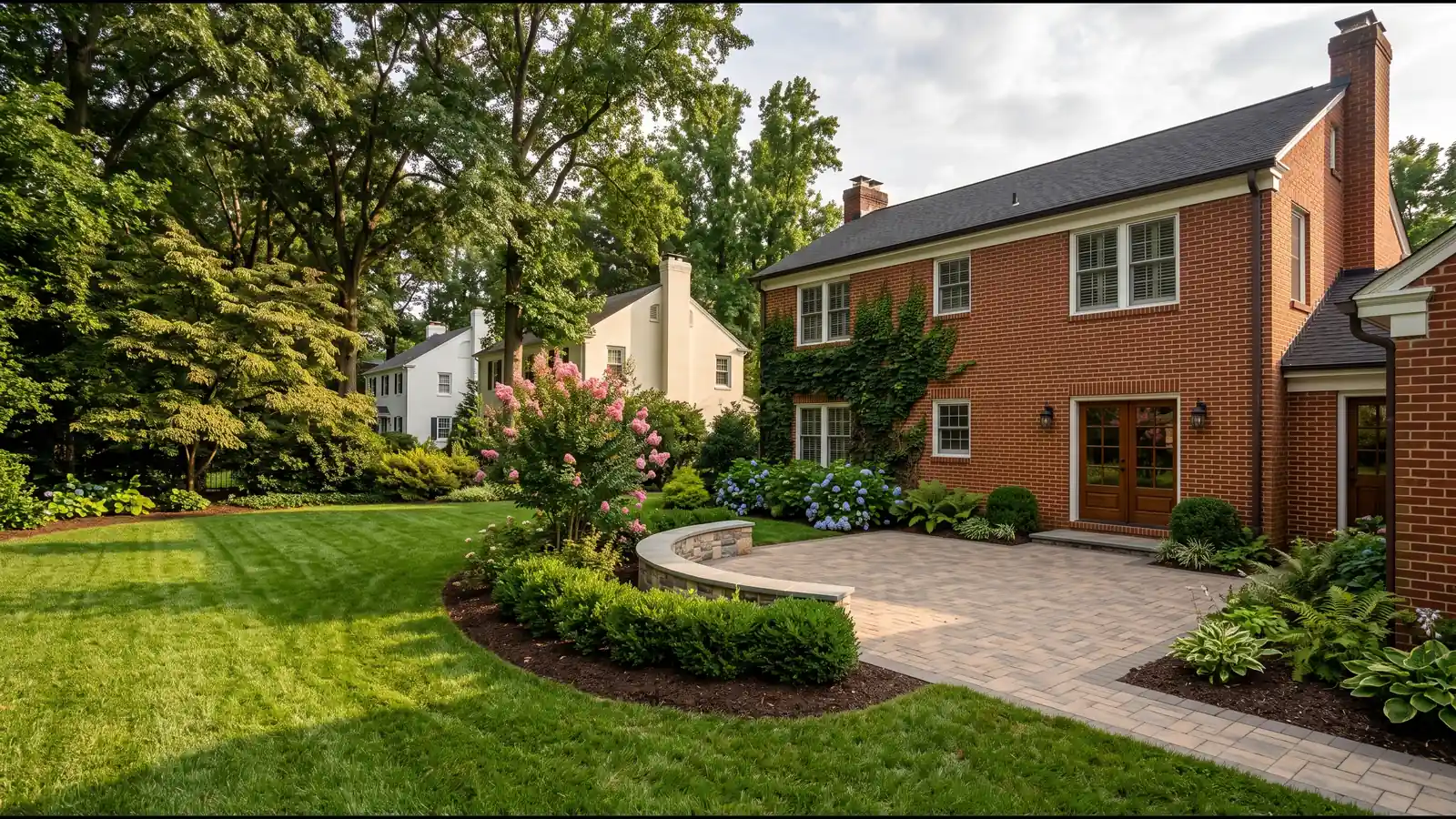
Irrigation System Types
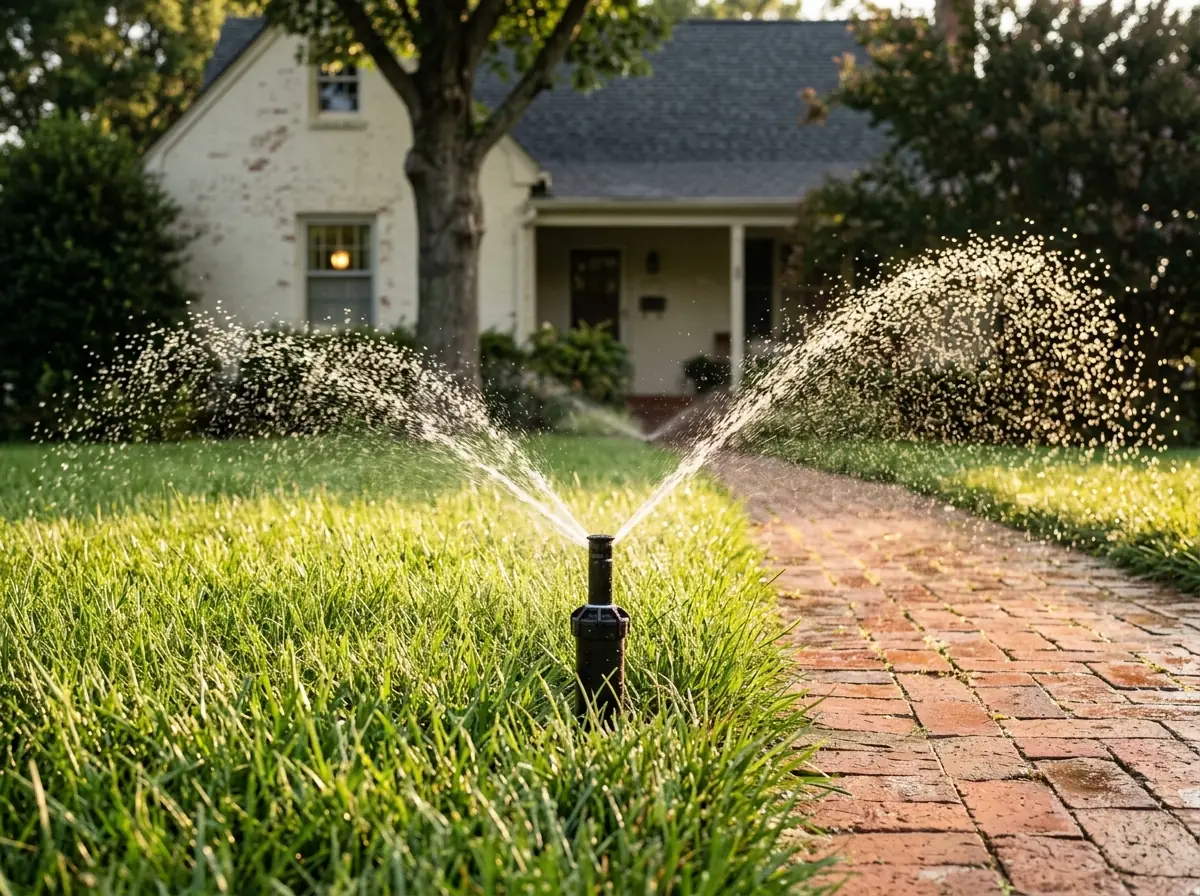
In-Ground Sprinkler Systems
A lawn sprinkler system runs from a tap on the water line, through a backflow preventer, to a set of valves, each feeding one zone of pipe buried a few inches under the turf. Rotors throw a rotating stream and suit large open lawn. Spray heads cover a fixed pattern and suit narrow strips and small yards. Heads in one zone should all be the same type, so the zone puts down an even amount of water; mixing rotors and sprays on one valve is how dry rings and soggy patches happen.
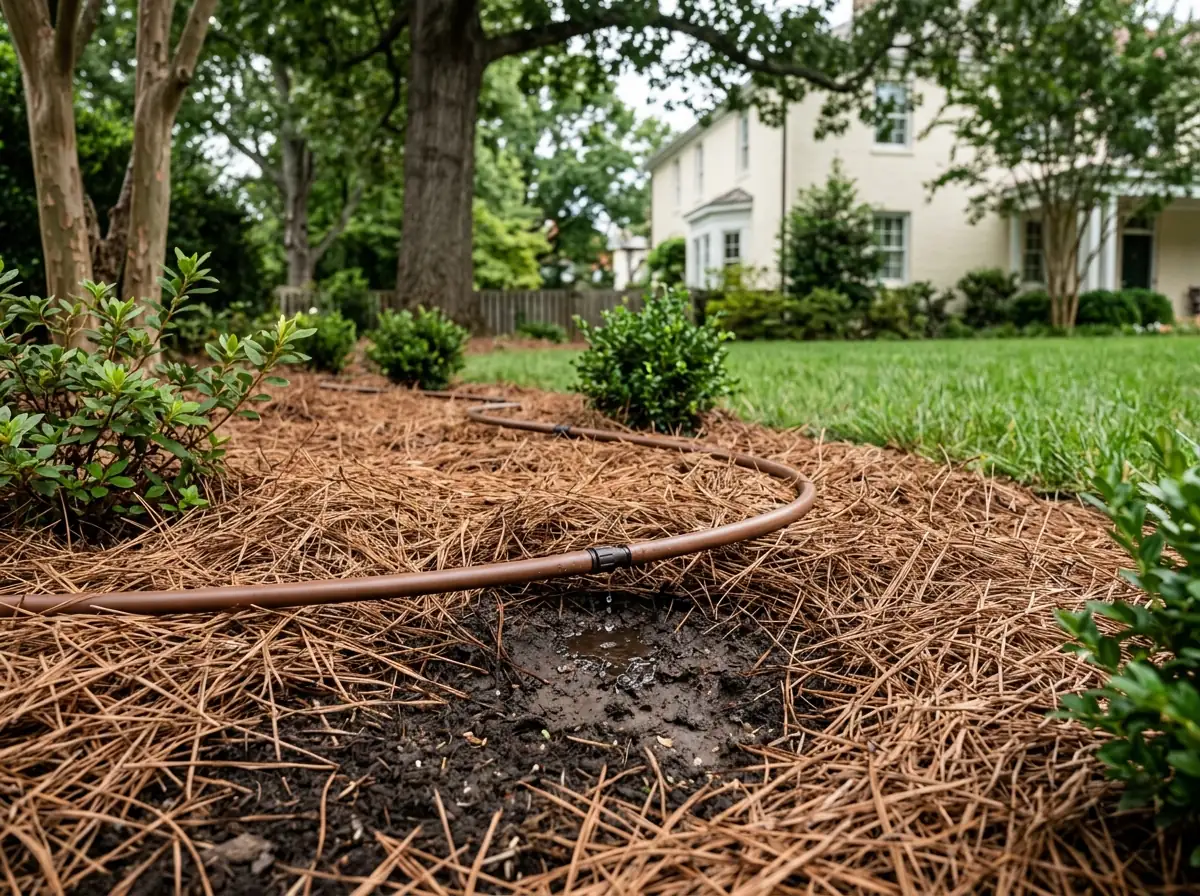
Drip Irrigation for Beds
Drip line lays on the soil under mulch and releases water a little at a time at each emitter. It wets the root zone without spraying leaves or the sidewalk, which cuts disease on shrubs and perennials and wastes less to runoff and wind. On clay, slow drip also gives water time to soak in instead of running off. Drip zones run longer than lawn zones and need a filter and pressure regulator at the valve.
Smart Controllers and Rain Sensors
A basic timer waters on a fixed schedule whether it rained last night or not. A weather-based controller adjusts run times from local weather data, and a rain sensor stops a cycle during a storm. EPA's WaterSense program labels weather-based controllers that meet its criteria and says replacing a standard clock timer with one can save a home up to 15,000 gallons of water a year. Wi-Fi models let you pause the system from your phone when a storm is coming.
Sprinkler Repair and Tune-Ups
Common repairs are broken heads (usually a mower or a car tire), a valve that won't shut off, a zone that won't come on because of a bad wire or solenoid, and leaks that show up as a wet spot that never dries. A spring start-up checks every zone, straightens tilted heads and resets the controller. A fall shutdown drains or blows out the lines before freezing weather; the median date of Richmond's first 32°F freeze is November 4.
Why Richmond homeowners call Richmond Elite Landscaping
- Free on-site estimate
- Scope, materials and price in writing before work starts
- Utility lines marked through VA 811 before digging
- One local landscaping contractor, not a call list
- No charge to homeowners for the referral
Backflow, Licensing and Other Rules
Backflow preventer
Virginia's waterworks regulations list lawn sprinkler and irrigation systems among the connections that need a backflow prevention assembly. It stops water that has sat in buried pipe from flowing back into the drinking supply.Annual testing
Richmond's Department of Public Utilities requires backflow assemblies to be tested by a certified tester when installed, every year after that, and after any repair or move. Ask whether the quote includes the first test and who files it with the city.Contractor license
Installing or repairing irrigation systems falls under the Landscape Irrigation specialty on a Virginia contractor license, required for jobs over $1,000.Utility marking
Trenching for pipe needs a VA 811 locate request first.Your water bill
A sprinkler system uses city water, so a leak or a controller stuck on shows up on the next bill. Checking the meter with everything off is a quick leak test.
Sprinkler System Cost
HomeGuide's national figures put a new sprinkler system at $0.50 to $2.50 per square foot, $600 to $2,000 per zone, or $3,000 to $10,000 for a quarter-acre lawn. We haven't found Richmond-specific figures. The number of zones, drip versus spray, the controller, the backflow assembly and how much of the yard sits under tree roots or hardscape all move the number. Adding sleeves under a new patio or walk before it's built saves boring under it later.
A quote worth comparing lists:
Zones
How many, and which are rotor, spray or drip.Heads and controller
Brand and model, and whether the controller is weather-based.Backflow
The assembly type, the first annual test and who files it.Sleeves and restoration
Pipe under walks and drives, and who repairs the lawn trenches.Seasonal service
Spring start-up and fall shutdown, and their price after the first year.
How Much Water a Richmond Lawn Needs
Richmond averages about 45.5 inches of rain a year, but it doesn't arrive on a schedule, and hot, dry stretches of summer turn fescue brown without extra water. Virginia Cooperative Extension puts an established lawn's need at about 1 inch of water a week, from rain and irrigation together, so the system is set to top up rain, not replace it. Extension recommends soaking the soil about 4 inches deep and watering early in the morning. On slow-draining soils like Richmond clay, it suggests splitting that inch into smaller amounts every three or four days so water soaks in instead of running off. A rain gauge in the yard tells you how much the sky already delivered that week.
New sod and seed are the exception: they need light, frequent watering until they root. For that stage, see sod installation and seeding. If water from the system is pooling against the house, the problem may be grading rather than the sprinklers; see drainage solutions.