

New Lawn Options
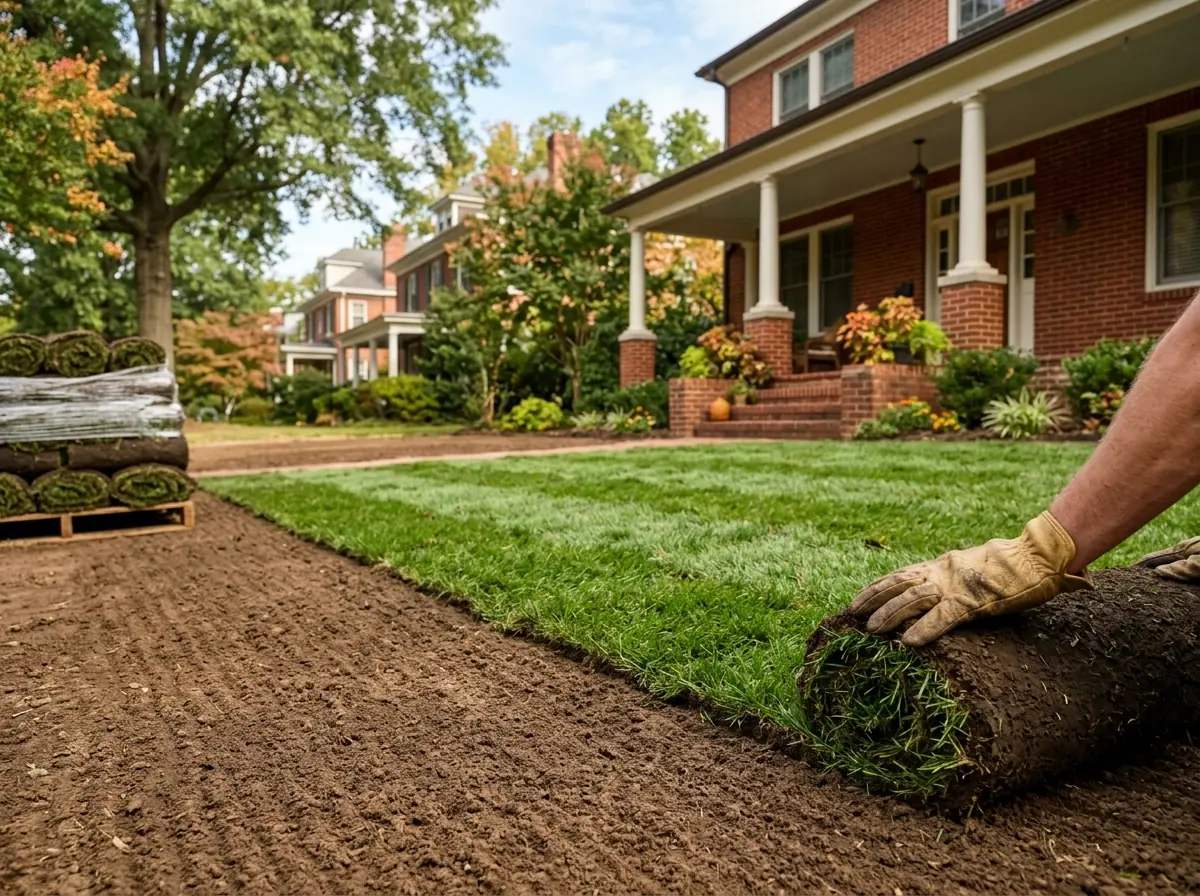
Tall Fescue Sod
Tall fescue sod, often sold as a blend of several fescue varieties, is one of the cool-season grasses Extension lists for Virginia lawns. It arrives cut in rolls or slabs and should go down the day it's delivered, before the stacked rolls heat up on the pallet. Virginia Cooperative Extension's sod guidance is to stagger the pieces like brickwork, push them tightly together, roll with a heavy roller and water thoroughly right after laying. Ask whether the sod is certified: the Virginia Crop Improvement Association runs a sod certification program with field and preharvest inspections, and certified sod ships with a label. Sod is the answer for a slope that would wash out as seed, for a yard that needs to look finished now, or for a spring project that can't wait for the fall seeding window.
Seeding
Seeding is the cheaper route. Virginia Cooperative Extension puts the best window at late summer to mid-fall, with September and October preferred, and gives a seeding rate of 6 to 8 pounds of tall fescue per 1,000 square feet for a new lawn. Seed needs good contact with loose soil, a light cover of straw or mulch to hold moisture, and daily light watering until it's up. Which seed to buy is covered in our guide to the best grass seed for Richmond.
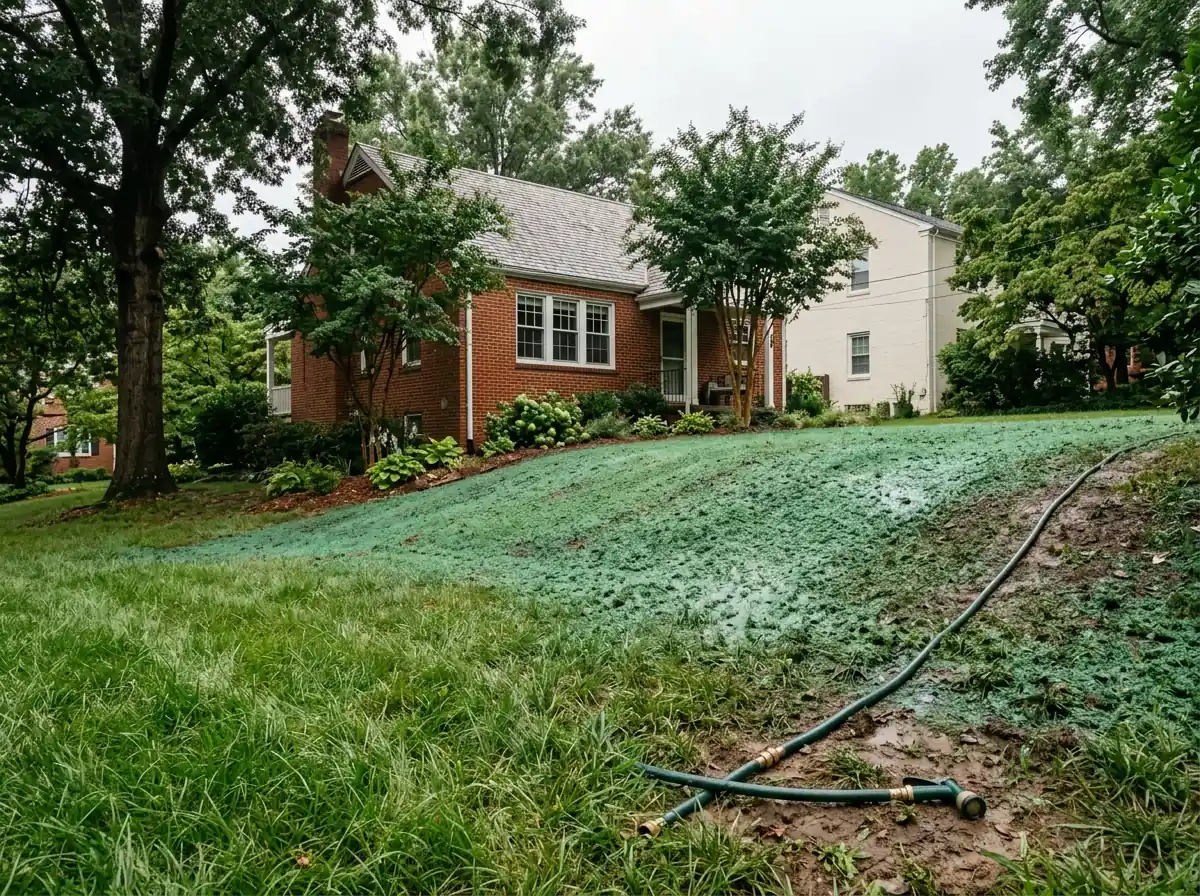
Hydroseeding
Hydroseeding sprays seed and fertilizer as a wet slurry from a tank, with mulch applied in the same pass or right after. Contractors often leave lime out of the tank because it's abrasive. Virginia's Erosion and Sediment Control Handbook lists the hydroseeder as an approved way to apply seed. The mulch holds the seed in place and keeps it damp, so it suits slopes, large areas and bare ground after construction, where loose seed would wash away in the first storm. It costs more than hand seeding and less than sod, and it still follows the fall seeding calendar.
Lawn Renovation
A lawn that's more weeds and bare clay than grass is often cheaper to renovate than to patch. Renovation means killing off the existing weeds, a soil test, lime if needed, loosening or core-aerating the surface, then seeding or sodding the whole area. Plan on leaving a new lawn alone for a while afterwards: Extension says not to core aerate newly seeded or sodded turf in its first year. For a lawn that's thin but still mostly fescue, overseeding is usually enough; see lawn aeration and overseeding.
Why Richmond homeowners call Richmond Elite Landscaping
- Free on-site estimate
- Scope, materials and price in writing before work starts
- Utility lines marked through VA 811 before digging
- One local landscaping contractor, not a call list
- No charge to homeowners for the referral
Soil Prep Before Sod or Seed
- 1
Soil Test
A routine test from the Virginia Tech Soil Testing Lab costs $10 and tells the installer how much lime and fertilizer the new lawn needs. The red clay soils of the Piedmont side of Richmond are strongly acidic, and fescue grows poorly when the pH is too low.
- 2
Clear and Grade
Old turf, weeds, rocks and construction debris come out. The surface is graded so water runs away from the house, with low spots filled.
- 3
Loosen the Clay
Compacted clay is tilled or scarified a few inches deep, so roots can get in. Lime and starter fertilizer are worked into that loose layer.
- 4
Rake Smooth and Firm
The installer rakes the surface level and rolls it lightly, so footprints don't sink and the sod sits flat against the soil.
Sod or Seed: How to Choose
Budget
HomeGuide's national average for sod is $1 to $2 per square foot installed. Seed is a fraction of that, even with straw and starter fertilizer.Season
Seed belongs in late summer to mid-fall. Sod isn't tied to that window, but hot weather makes it harder to keep alive.Slope
Sod or hydroseed on slopes; loose seed washes out in the first storm.Use
Sod takes light use in weeks. A seeded lawn needs most of a season before kids and dogs can run on it.Weeds
New seed has to compete with weeds that sprout alongside it; sod goes down as a solid mat.
Watering and Care After Installation
New sod and seed live or die on water for the first few weeks. Sod gets a thorough watering right after it's laid, then enough to stay moist until it roots. Once it has knitted in, Extension says to water deeply, to a depth of 3 to 4 inches, and less often. Seed needs light watering once or twice a day to keep the surface damp until it germinates, then less often and deeper as it grows.
Stay off it
Keep foot traffic, pets and mowers off until sod won't lift when you tug a corner.First mowing
Mow when the new grass reaches mowing height, at the 3 inches Extension recommends for tall fescue.