

Shrub Trimming Services
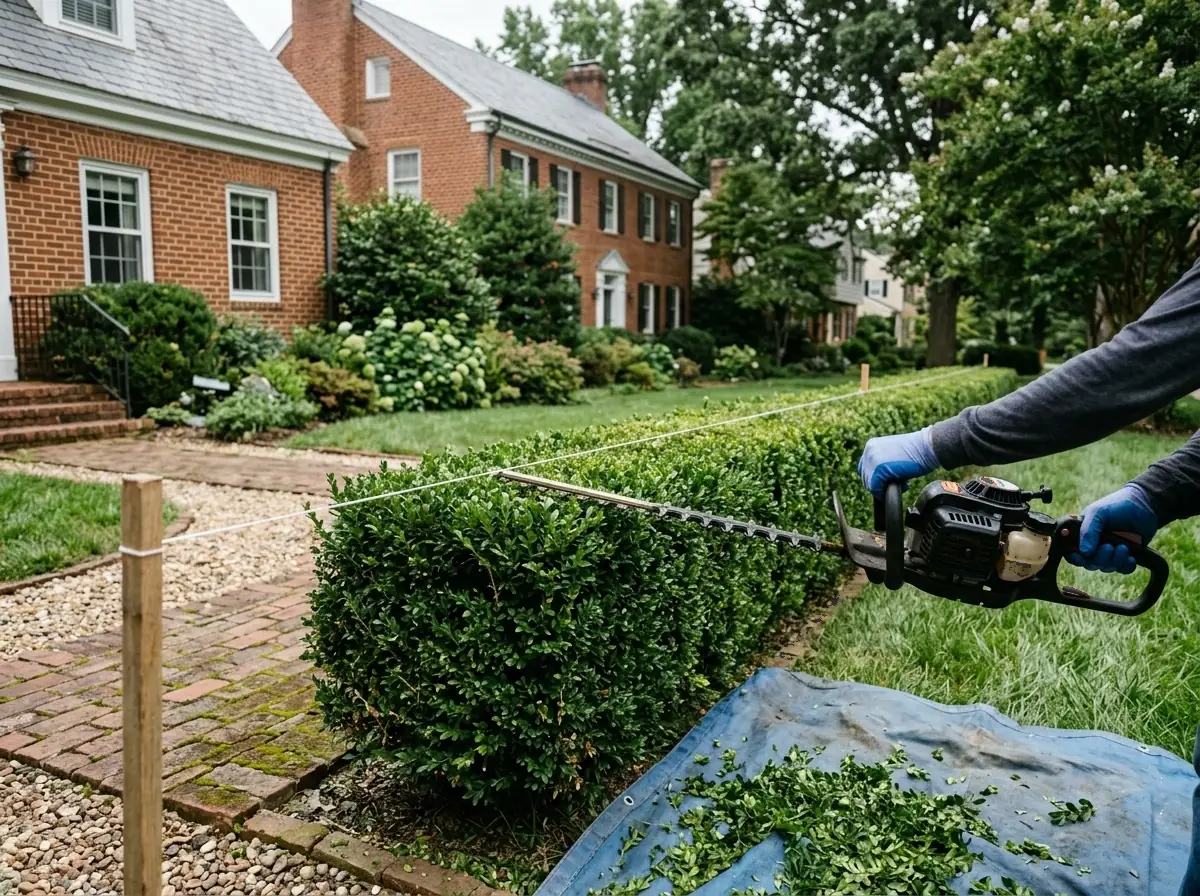
Hedge Shearing
Formal hedges of boxwood, holly, privet or cherry laurel are sheared with hedge trimmers to a set line, usually in late spring after the first flush of growth and again in summer. The shape matters more than neatness. Extension's advice is to prune hedges so the base is wider than the top. Our reasoning for why: a hedge that's wider at the top shades its own lower branches. Shear one straight up and down, or wider at the top, and the bottom thins out and goes bare. A string line pulled between stakes keeps a long hedge level.
Hand Pruning Flowering Shrubs
Flowering shrubs look better and bloom more when they're thinned with hand pruners and loppers rather than sheared into balls. Thinning cuts remove whole branches back to a main stem or the ground, which opens the shrub to light and keeps its natural shape. Azaleas, forsythia, lilac and other spring bloomers are pruned right after they finish flowering, because Virginia Cooperative Extension notes their flowers form on the previous season's wood. Pruning them in fall or winter cuts off next spring's display.
When a branch does need shortening rather than removing, Extension's guidance is to cut back to a bud that points outward, so new growth heads away from the center and the inside of the shrub doesn't get too dense. Done well, the cuts are hard to spot a few weeks later.
Crape Myrtle Pruning
Cutting crape myrtles back to thick stubs every winter comes from a misconception that they need it to bloom. Extension calls the result "crape murder" and topping an unacceptable practice. Extension's calendar puts crape myrtle pruning in January through March and warns that fall or early-winter cuts can reduce its winter hardiness. Proper pruning removes crossing branches, suckers at the base and the odd limb growing into the house, and leaves the trunks alone. If a crape myrtle is always too big for its spot, the fix is a smaller variety, not a saw.
Renewal Pruning for Overgrown Shrubs
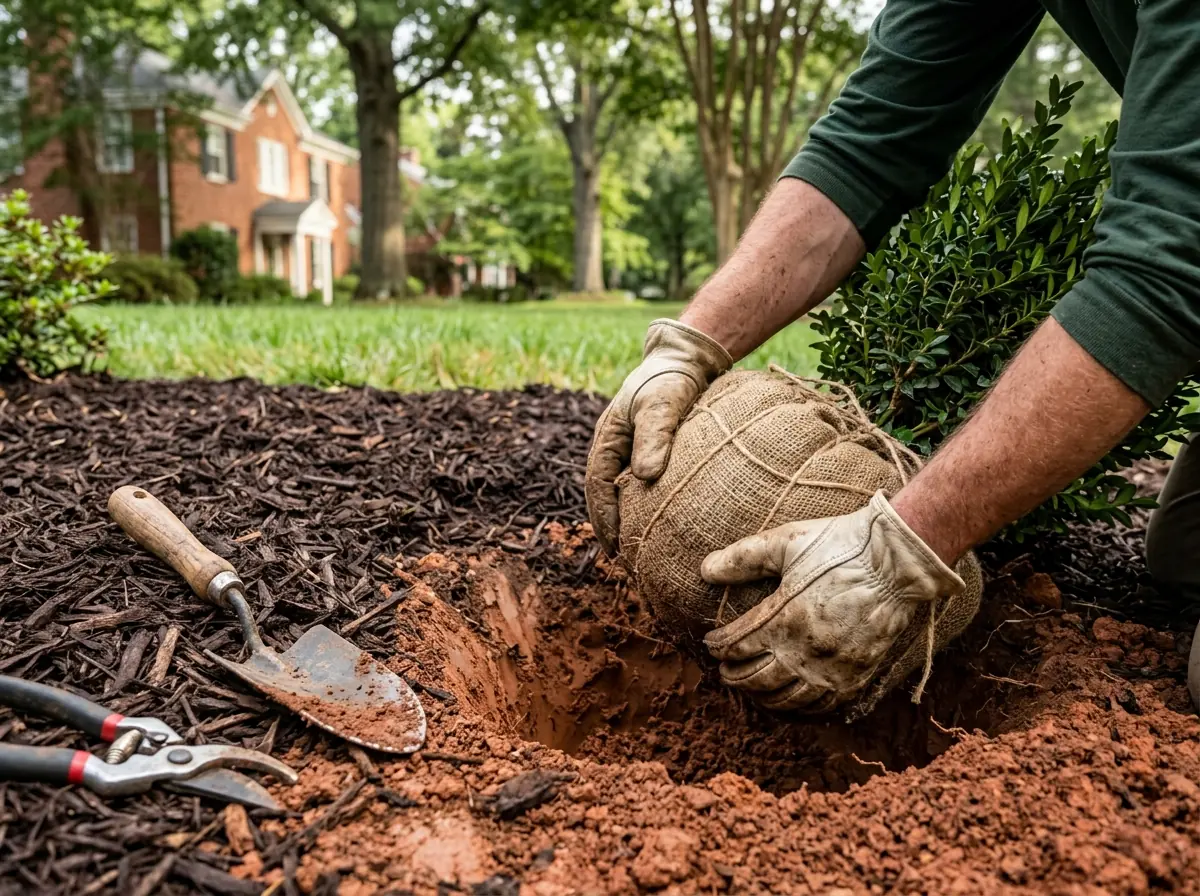
Shrubs that have swallowed a window or walkway can often be brought back rather than pulled out. Extension describes a gradual method over three years: remove a third of the oldest stems the first year, half of the remaining old stems the next, and the rest in the third, while new shoots replace them. The shrub stays presentable the whole time. Abelia, hydrangea, lilac, spirea and rose-of-Sharon tolerate even a harder cut back near the ground. Plants that don't regrow from old wood may be better replaced. For new plants spaced to fit, see planting, mulch and garden beds.
Why Richmond homeowners call Richmond Elite Landscaping
- Free on-site estimate
- Scope, materials and price in writing before work starts
- Utility lines marked through VA 811 before digging
- One local landscaping contractor, not a call list
- No charge to homeowners for the referral
Foundation Shrub Clearance
Shrubs pressed against brick, siding, windows and the air-conditioning unit trap moisture and block airflow. A trim can pull them back to leave working room behind the plants, and cut branches off the roofline and gutters. If a shrub needs cutting back hard every year to stay clear of the house, it was planted too close or is the wrong size for the spot; see landscape design for replacing it with something that fits.
When to Trim Shrubs in Richmond
Late winter (January to March)
Shrubs that flower on the current season's wood: crape myrtle and butterfly bush through March, abelia by the end of February, per Extension's pruning calendar. Also the time for structural cuts on deciduous shrubs, while you can see the branches.Right after bloom (April to June)
Azaleas, forsythia, lilac, spirea and other spring bloomers, before they set next year's buds.Late spring to midsummer
Shearing of boxwood, holly and other formal hedges after new growth hardens, with a lighter touch-up later in summer.Not crape myrtle in fall
Extension's calendar notes that fall and early-winter pruning can reduce crape myrtle's winter hardiness.
Boxwood Blight and Clean Tools
Boxwood blight is a disease of boxwood that was first found in Virginia at a Carroll County nursery in 2011, and it spreads on tools, vehicles and debris. Virginia Cooperative Extension tells landscapers to sanitize pruners and trimmers between boxwood plants and between work locations, and to clean vehicles between properties. Ask the contractor how they handle it, especially if you have established boxwood hedges.
Clean tools
Extension's pruning guide lists rubbing alcohol among disinfectants for tools and notes household bleach is highly corrosive to metal.Boxwood debris
Extension says not to compost it or put it out for curbside brush pickup. Double-bag it for the landfill instead.Cost
HomeGuide's national average for hedge trimming is $185 to $450 for 50 to 100 feet of hedge. We haven't found Richmond-specific figures.
For removing the clippings and leaves after a trim, see yard cleanup and leaf removal.