
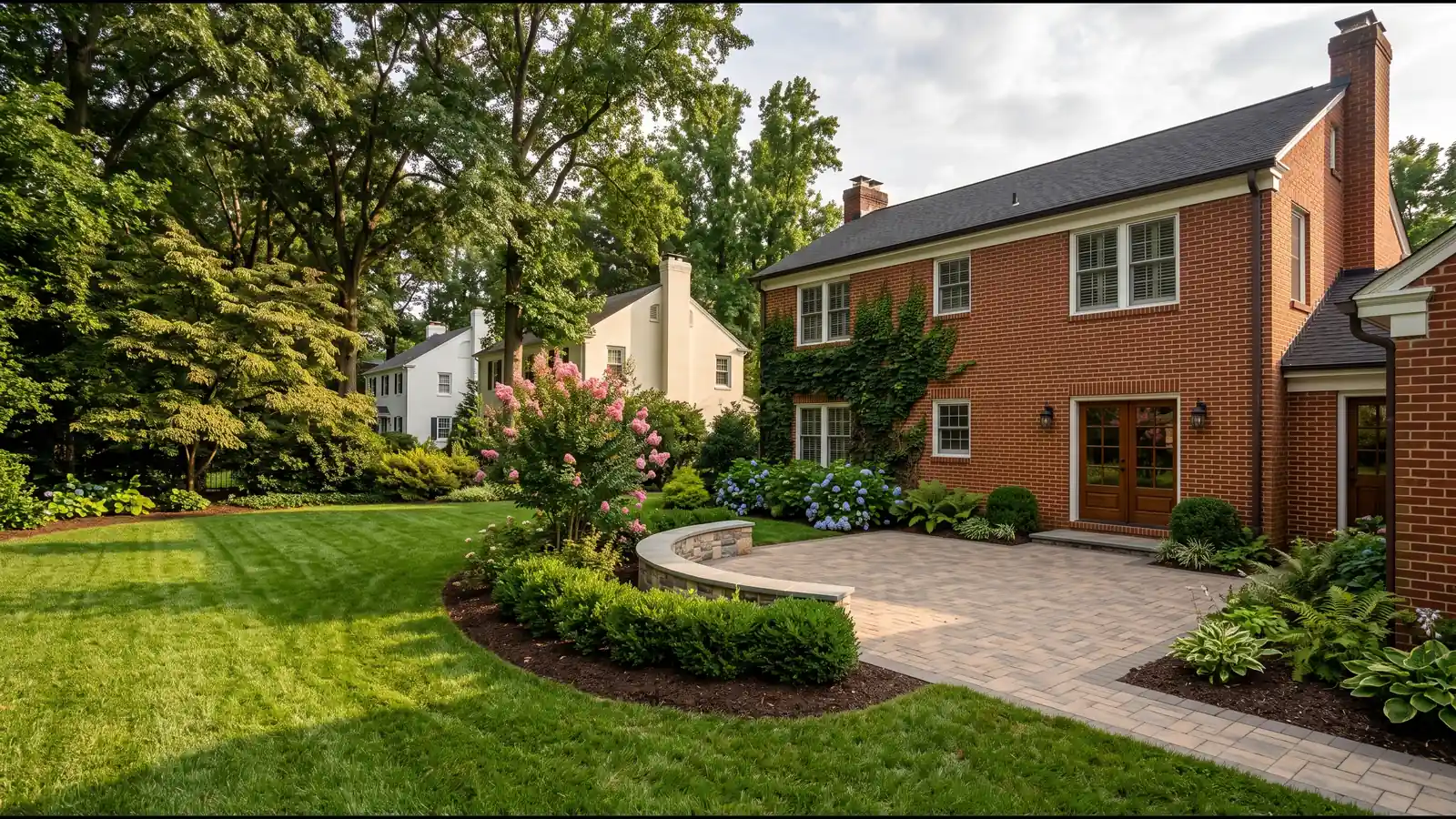
Outdoor Lighting Types
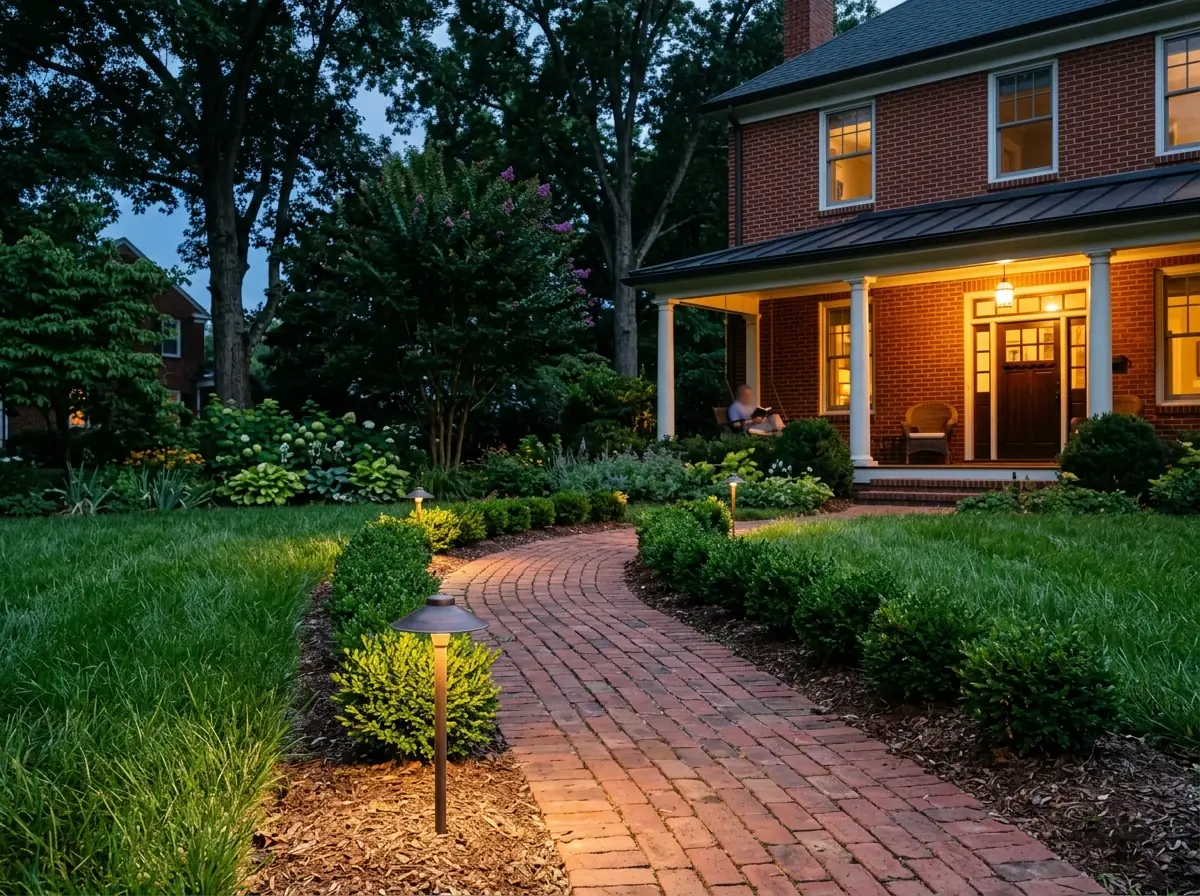
Path and Step Lights
Path lights sit low on a stake and throw light down onto the walk rather than out into your eyes. They're spaced so the pools of light just meet or leave small dark gaps, which looks better than a runway of fixtures in a straight line. Step lights are recessed into the risers of stone or block steps, so every tread is lit without a fixture in the way.
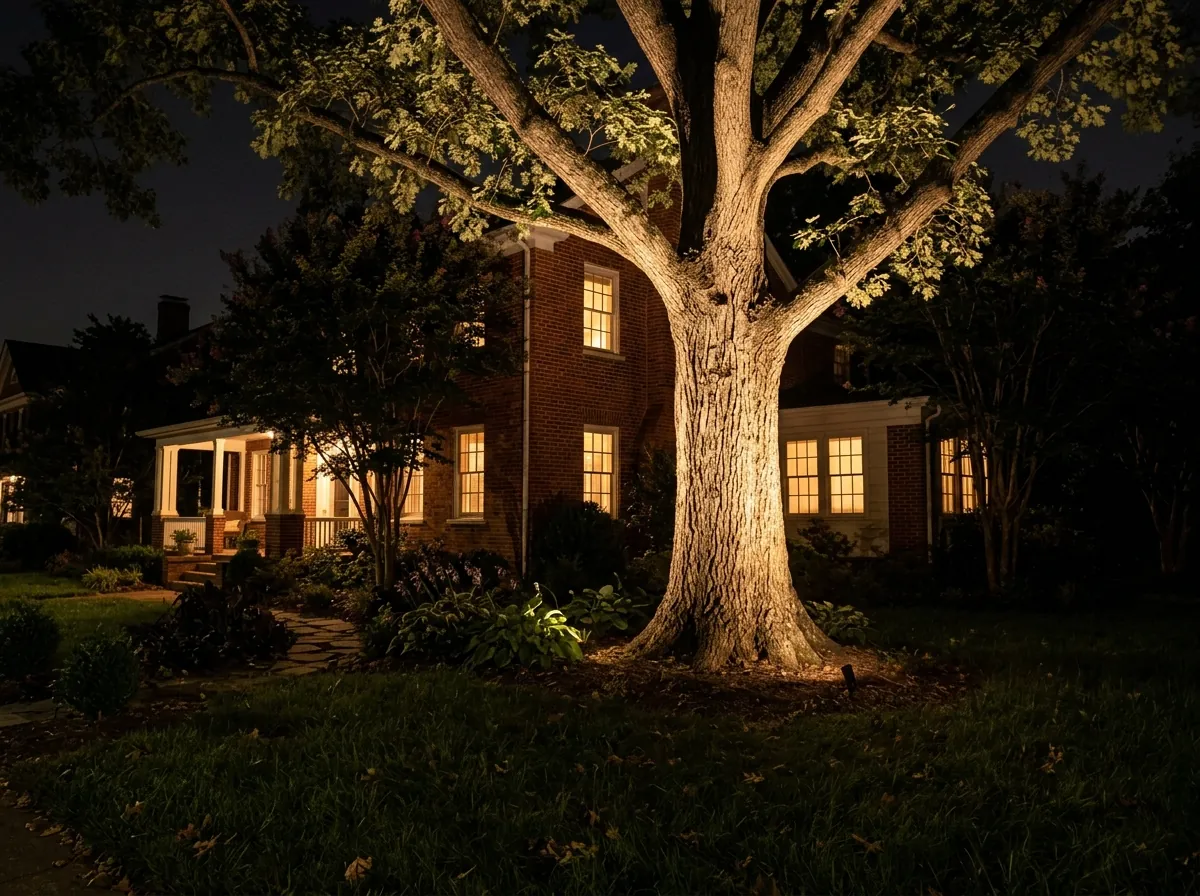
Uplighting Trees and Walls
Uplights are aimed from the ground into a tree canopy or across the face of a wall. Placed close to brick, a narrow beam grazes the surface and picks out the texture; set further back, a wider beam washes the whole facade. A mature oak or magnolia can carry two or three fixtures from different sides. Aim matters more than brightness, since a light pointed past the tree lights the sky and the neighbor's bedroom window.
Downlighting and Moonlighting
Fixtures mounted high in a tree and pointed down throw a soft, broken pattern through the leaves onto a lawn or patio below, close to what moonlight does. It's the most natural-looking effect and hides the source. Installers use tree-friendly mounts that can be loosened as the trunk grows.
Facade and Entry Lighting
A wide, soft wash across the front of a brick house, plus a light at the front walk and steps, does more for curb appeal at night than a row of path lights. The goal is even light on the wall without hot spots, so fixtures sit a few feet out and are aimed up the brick rather than into the windows.
Patio, Wall and Deck Lights
Low-profile fixtures tucked under wall caps, seat walls and steps light a patio without a single visible bulb. Many hardscape block and cap systems have light kits made to fit; if you're building a patio, running the cable during construction is easier and cheaper than cutting it in later. See hardscaping and paver patios.
Why Richmond homeowners call Richmond Elite Landscaping
- Free on-site estimate
- Scope, materials and price in writing before work starts
- Utility lines marked through VA 811 before digging
- One local landscaping contractor, not a call list
- No charge to homeowners for the referral
How a Low-Voltage Lighting System Goes In
- 1
Night Walk and Layout
The contractor looks at the yard after dark, marks which trees, paths and walls to light, and places fixtures with flags.
- 2
Transformer and Timer
A transformer plugged into a weatherproof outdoor outlet steps the current down and powers the fixtures. The National Electrical Code's article on low-voltage lighting limits these systems to 30 volts AC, or 15 volts where people could touch wet parts. A timer, a photocell that switches on at dusk, or an app sets when the lights come on.
- 3
Cable Runs
Direct-burial low-voltage cable is laid in shallow slits through the lawn and beds. Runs are sized and split so fixtures at the end of a long line don't come out dimmer than the ones near the transformer.
- 4
Fixtures and Aiming
Fixtures are set, connected with waterproof connectors and aimed on a second night visit, when the effect can actually be seen.
Landscape Lighting Cost
HomeGuide's national average for landscape lighting is $80 to $300 per fixture, or $800 to $6,000 for a whole system including labor, from a page last updated in December 2023. We haven't found Richmond-specific figures. Fixture material (solid brass and copper cost more than aluminum), the number of fixtures, the length of cable runs, and whether a new outdoor outlet is needed for the transformer set most of the price. Ask for the quote to list fixtures by type and count, the transformer size and the timer or app control, so two bids can be compared line by line.
Upgrading an Old Halogen System
Many older systems run halogen bulbs. LED replacement lamps are sold for many of those fixtures, and the upgrade is a good moment to have the transformer, the splices and any cable cut by edging tools checked. Fixture bodies that have rusted through may be worth replacing outright.
Lighting Without Glare
DarkSky International's principles for outdoor lighting come down to a few habits that also make a yard look better.
Light a purpose
Light steps, paths and the features you want to see, not the whole yard.Aim it down or at the target
Shielded fixtures keep the light on the tree or path instead of in people's eyes and the night sky.Keep it low
Use the lowest brightness that does the job; path lights don't need to compete with a porch light.Use warm color
DarkSky recommends LEDs with a color temperature of 3000K or lower. Warm white also looks better against brick and planting than blue-white.Turn it off
Timers and dimmers keep the lights on only when someone's outside to see them.