

Aeration and Overseeding Services
Core Aeration
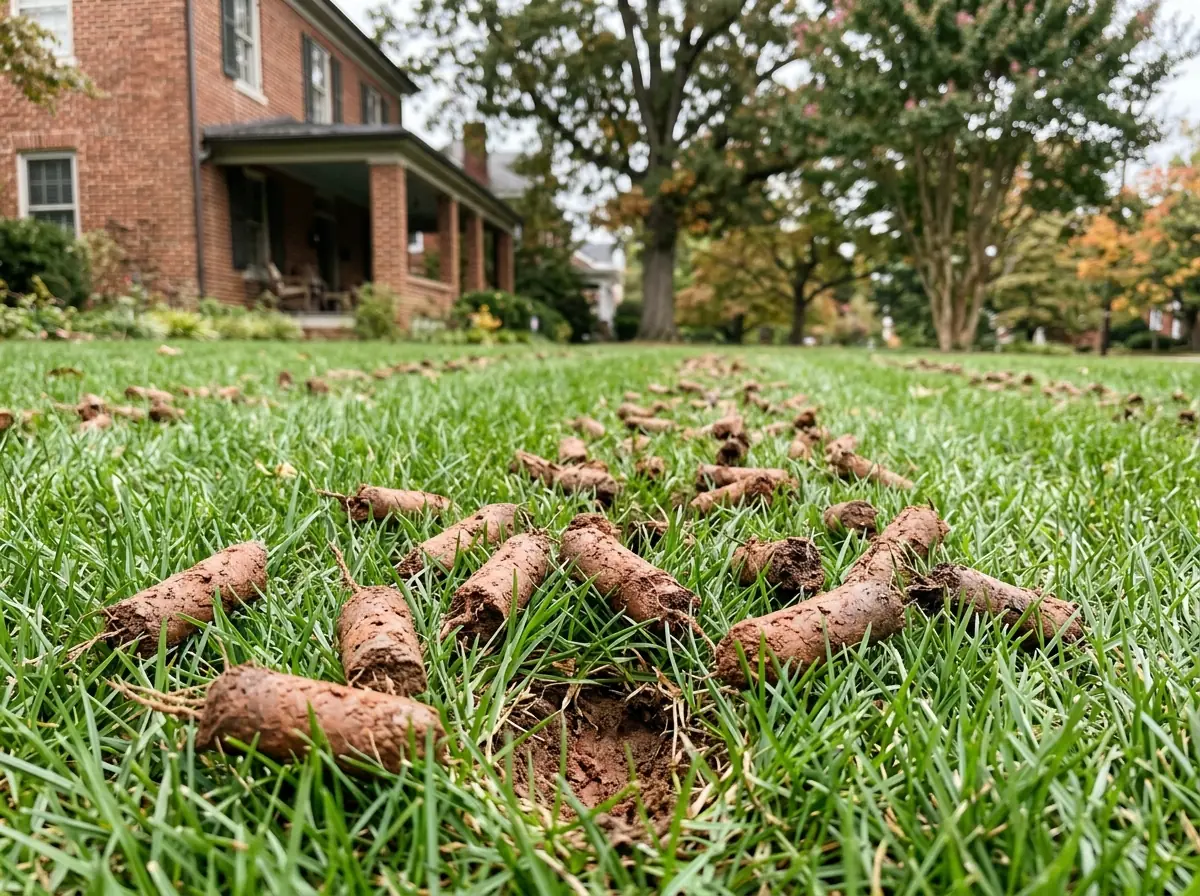
A core aerator is a machine with hollow tines that punch into the lawn and pull out plugs of soil. Virginia Cooperative Extension describes cores about 1/2 to 3/4 inch across, pulled from holes 1 to 6 inches deep and spaced 2 to 6 inches apart. The plugs stay on the surface and break down over two to four weeks of rain and mowing. Spike aerators, which just poke holes, press the soil around each hole tighter and do little on clay. Ask for core aeration by name.
Aeration works best when the soil is moist but not wet, so the tines go deeper and pull clean plugs. Extension suggests watering the lawn about two days before the aerator comes, which on dry late-summer clay makes the difference between plugs and scratches.
Overseeding Thin Fescue
Tall fescue is a bunch-type grass. It doesn't spread sideways the way Bermuda grass does, so bare patches from summer heat, disease or foot traffic stay bare unless they're reseeded. Overseeding right after aeration drops seed into the open holes and loosened surface, where it gets the soil contact it needs to germinate. Buy seed by the label: the bag lists the varieties, the germination rate and the weed seed content. Rates are lower than for a new lawn. Virginia Cooperative Extension gives 6 to 8 pounds of tall fescue per 1,000 square feet to start a lawn from scratch, while a Prince William County Extension handout suggests at least 2 to 3 pounds per 1,000 square feet for overseeding, and 4 to 6 for a major renovation. Ask the service how many pounds it's spreading, since that number is where cheap overseeding quotes save money. Our best grass seed for Richmond guide compares the seed options.
Slit Seeding
A slit seeder cuts shallow grooves in the soil and drops seed straight into them. It gets better seed contact than broadcasting over the top and is the usual choice for lawns that are very thin or where aeration alone leaves too much seed sitting on the surface. Some services aerate and slit seed in the same visit.
Compost Topdressing
A thin layer of screened compost raked over the lawn after aeration fills the holes with organic matter. Over a few seasons it improves the structure of heavy clay and helps new seed stay moist. It's optional, adds cost and is most useful on lawns with very poor soil.
Why Richmond homeowners call Richmond Elite Landscaping
- Free on-site estimate
- Scope, materials and price in writing before work starts
- Utility lines marked through VA 811 before digging
- One local landscaping contractor, not a call list
- No charge to homeowners for the referral
When to Aerate a Lawn in Richmond
For tall fescue and other cool-season grasses, Virginia Cooperative Extension names late August to mid-September as the best time to aerate, with spring a distant second. That lines up with its seeding window of late summer to mid-fall, September and October preferred, so the aerator and the seed can go down in the same week.
Spring aeration is possible for compaction, but spring crabgrass preventers stop grass seed from germinating too. If you use a pre-emergent in spring, don't plan on overseeding in the same window. See crabgrass control in Richmond for how the two fit together.
Too late?
Extension's window runs to mid-fall. The later the seed goes down, the less time it has to root before winter, so September gives the best odds.Not new lawns
Extension says not to aerate a newly seeded or sodded lawn in its first year.Which lawns benefit most
Compacted clay, lawns that get heavy traffic from kids or dogs, and fescue thinned out by summer.
Before the Aerator Comes
Flag sprinkler heads and valve boxes
Tines break heads that sit flush with the turf.Flag buried wires
Pet-fence wire and low-voltage lighting cable run shallow and can be cut.Water ahead
Extension suggests watering about two days before, so the soil is moist but not wet.Mow first
A normal mowing before the visit lets the tines and the seed reach the soil.Clear the lawn
Hoses, toys and dog runs out of the way, and gates unlocked.
After Aeration and Overseeding
Water
Keep the seeded surface damp with light watering once or twice a day until the seed is up, then water less often and deeper.Leave the plugs
They break down on their own. Raking them up pulls seed out too.Mow late
Hold off mowing until new grass reaches mowing height, then cut at the 3 inches Extension recommends for tall fescue.Leaves
Fall leaves matted on new seed smother it, so keep them off the lawn. See yard cleanup and leaf removal.Fertilizer
Fall is the main feeding season for fescue; see the schedule on our lawn care page.
HomeGuide's national average for lawn aeration is $100 to $300; seed and overseeding are usually priced on top. We haven't found Richmond-specific figures.
For a lawn too far gone to overseed, see sod installation and seeding.