

Yard Drainage Solutions We Refer
French Drains
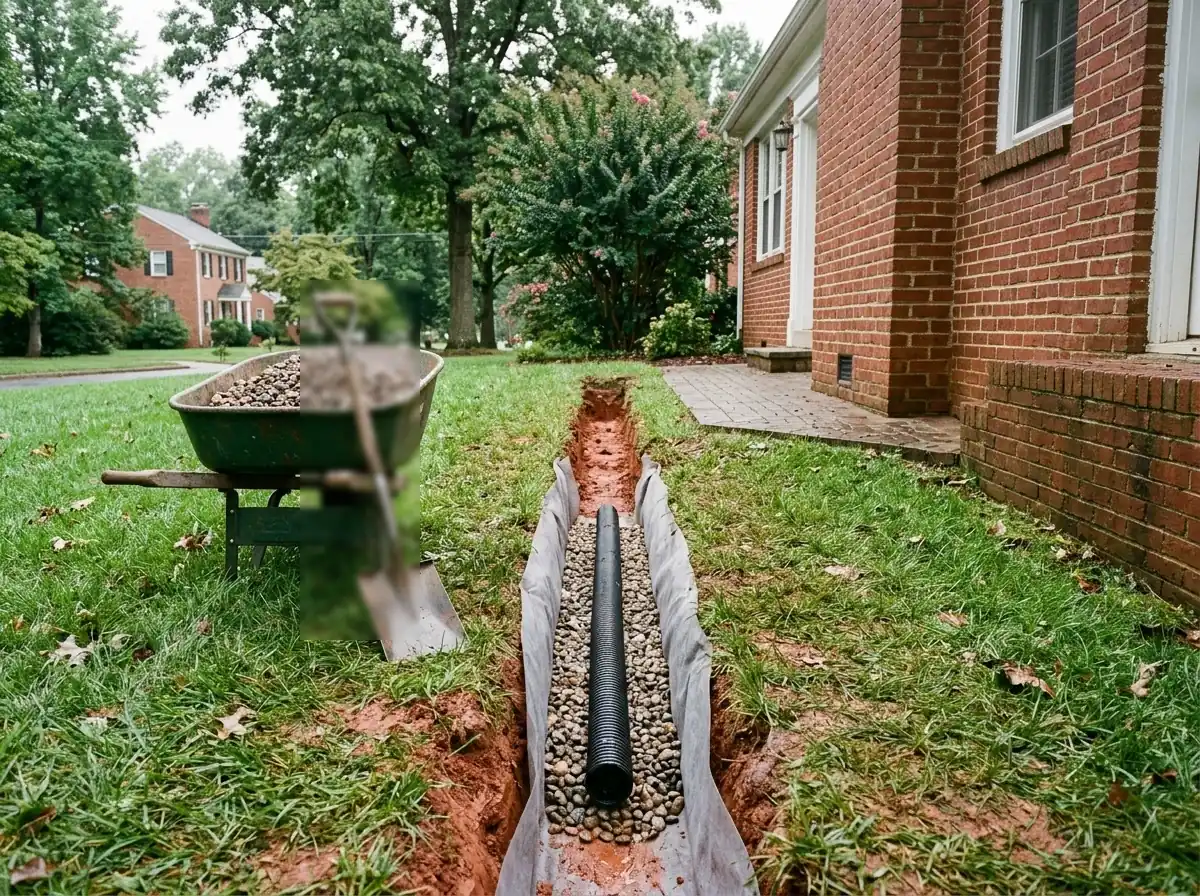
A French drain is a trench lined with filter fabric, a bed of clean washed stone, a perforated pipe, more stone on top, and the fabric folded over before soil or river rock goes back. Water seeping through the ground finds the gravel before it finds your crawlspace, runs into the pipe and follows the slope to an outlet: a lower part of the yard, a pop-up emitter or a dry well. The fabric matters most on clay. Without it, fine silt from the clay works into the stone and slows the drain down.
A curtain drain is the same build cut across a slope, uphill of the house, to intercept water before it arrives.
Downspout Extensions and Buried Downspouts
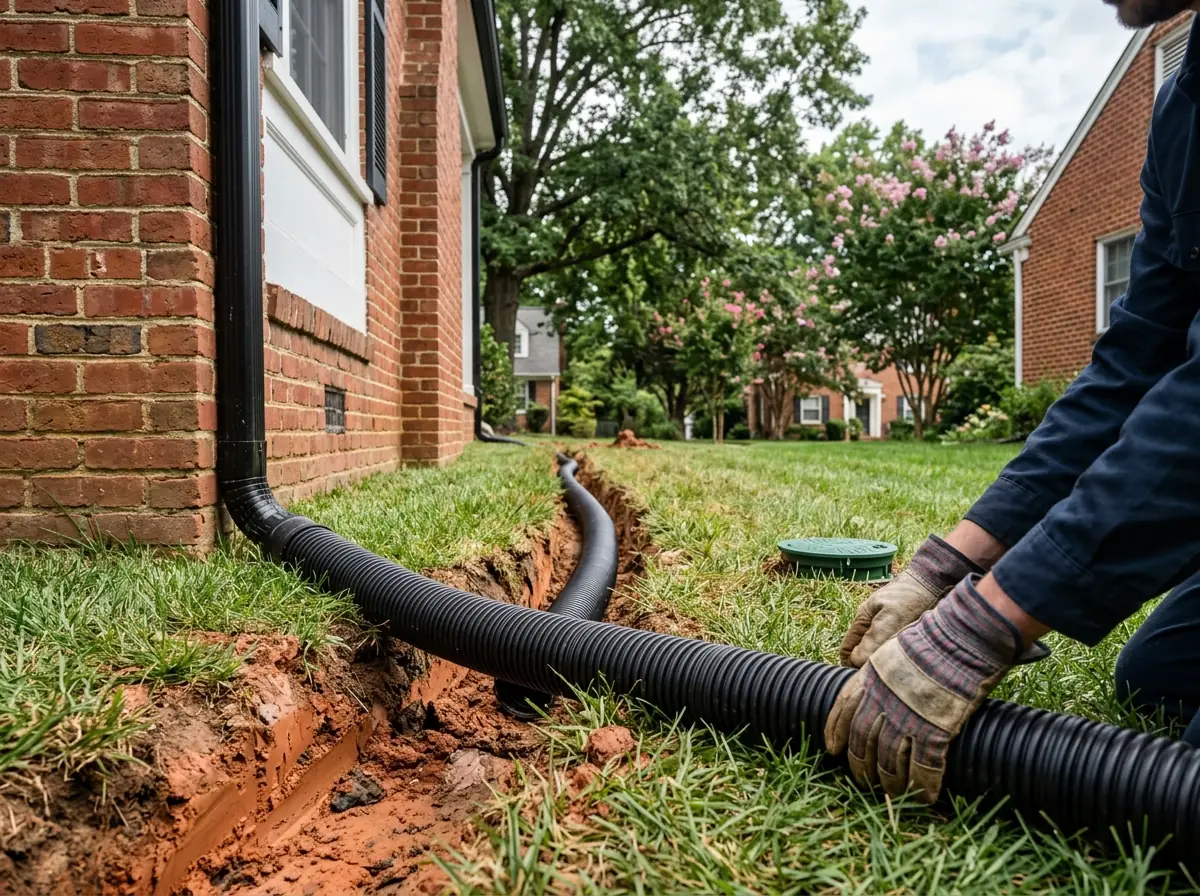
The USGS puts an inch of rain on one acre at 27,154 gallons, which works out to about 620 gallons on a 1,000-square-foot roof, and a single downspout can drop a large share of that at one corner of the house. Burying a pipe from each downspout to a pop-up emitter well out in the lawn is a simple fix worth trying before anything bigger. The Northern Virginia Soil and Water Conservation District recommends non-perforated pipe for these extensions, so the water isn't released next to the foundation it's meant to protect. Virginia's residential code sets a 5-foot minimum discharge distance only where expansive or collapsible soils are known; on slow-draining Richmond clay, farther is better.
Regrading and Swales
Over time, soil settles against a house and the lawn ends up sloping toward the foundation. Regrading rebuilds the fall away from the walls with compacted fill. Virginia's residential code sets the target: the ground should fall at least 6 inches within the first 10 feet from the foundation, and where a lot line or wall makes that impossible, drains or swales have to carry the water away instead. Across a larger yard, a swale, a shallow grassed channel, steers water around the house to the street or a lower corner. Grading only moves water; it has to be pointed somewhere that doesn't push it onto a neighbor's lot.
Catch Basins and Channel Drains
A catch basin is a grated box set at a low spot, piped underground to an outlet. A channel drain is a long narrow grate across a driveway apron or along a patio edge where sheet flow would otherwise run into a garage or door. Both handle surface water only, and both need their grates cleaned of leaves every fall.
Dry Creek Beds
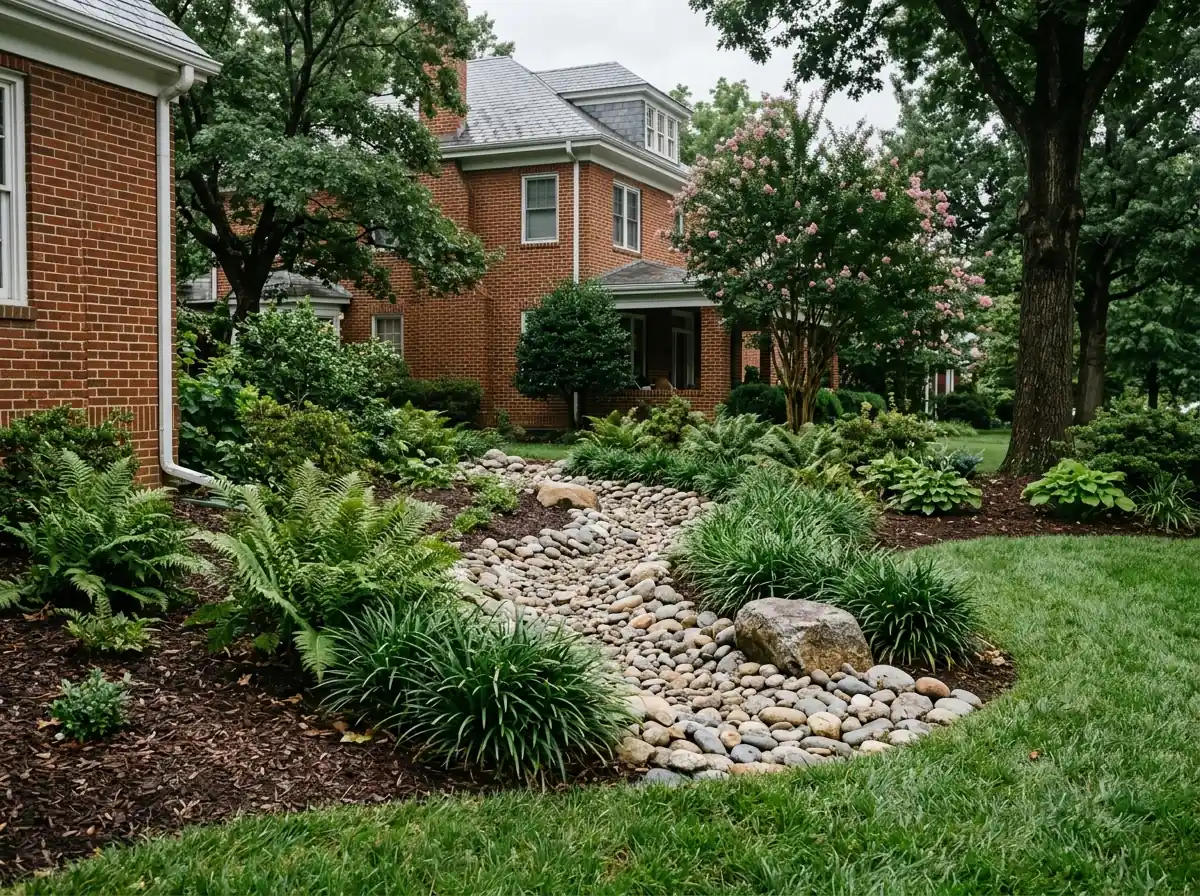
A dry creek bed is a shallow channel lined with fabric and river rock, sized to carry storm runoff along a path you choose. It stays dry most days and looks like part of the garden. Boulders on the bends slow the water, and plants along the banks hide the edges.
Rain Gardens
A rain garden is a shallow planted basin that collects runoff from a roof or driveway and lets it soak in. Chesterfield County's rain garden guide (the county borders Richmond) puts it at least 10 feet from the house, 6 to 12 inches deep, and sized so it drains within six to eight hours after a normal storm. On clay, where water soaks in slowly, the contractor may amend the basin soil or add an underdrain. Richmond gives a 20% stormwater fee credit for an approved rain garden, and at least a quarter of the roof area or its equivalent has to drain to it. Plants for each zone of a rain garden are in our guide to Virginia native plants.
Why Richmond homeowners call Richmond Elite Landscaping
- Free on-site estimate
- Scope, materials and price in writing before work starts
- Utility lines marked through VA 811 before digging
- One local landscaping contractor, not a call list
- No charge to homeowners for the referral
Find the Source Before You Dig
Three causes account for a lot of wet yards: roof water dumped at the foundation, a lawn that slopes the wrong way, or groundwater moving through the soil on a slope. The fix for one doesn't solve the others, so ask the contractor which one they think you have before you accept a quote.
Watch it rain
Walk the yard during a storm and note where water enters, pools and leaves. Photos help the contractor.Check the soil
West of the Fall Line, yards sit on red clay subsoil that drains slowly and stays soggy. East of it, sandier Coastal Plain soil drains quickly, and standing water there points to grading or a high water table.Look at the downspouts
A splash block a foot from the wall does little. Water should end up well away from the foundation.Test the drainage
Dig a hole about a foot deep, fill it with water and time how long it takes to empty. Slow drainage tells the contractor a soakage fix won't work on its own.
For water behind or under a wall, see retaining walls. For sprinkler overspray adding to a wet lawn, see irrigation and sprinkler systems.
French Drain Cost and Rules in Richmond
HomeGuide's national average for an outdoor French drain is $10 to $35 per linear foot, or $500 to $8,800 installed; basement interior drains cost more. We haven't found Richmond-specific figures.
Outlet
Virginia's residential code says surface drainage should go to a storm sewer or another approved point of collection that doesn't create a hazard to the house. Pushing water onto a neighbor's lot just moves the problem.Digging
Virginia law requires a VA 811 locate request before trenching, and utilities get time to mark their lines.Large jobs
A regrade across most of a big lot can cross Richmond's permit line: 4,000 square feet of disturbed ground, or 2,500 near protected Bay waters, triggers the city's erosion and stormwater permit.License
Grading work over $1,000 falls under the Landscape Service specialty on a Virginia contractor license.