

Deer-Resistant Plants: How the Ratings Work
Virginia Cooperative Extension's own deer-resistant list is adapted from Rutgers, West Virginia University and Maryland lists. Rutgers Cooperative Extension rates landscape plants on a four-letter scale: A is rarely damaged, B seldom severely damaged, C occasionally severely damaged and D frequently severely damaged. Rutgers recommends A and B plants for yards prone to deer damage, and says C and D plants need extra protection such as fencing or repellents. The University of Maryland's fact sheet on ornamentals uses a similar four-step scale for the Mid-Atlantic.
Both sources start with the same warning. Rutgers says "no plant is deer proof," and Maryland says "no plant is safe under all conditions." Whether deer eat something depends on how many deer there are, what else is available, the season and the weather. Maryland notes that damage is worst in snow or extreme cold, and again in early spring, when young growth on shrubs is the first green food around.
The two lists also disagree on some plants, partly because deer habits vary by region. Rutgers was compiled in northern New Jersey and the Maryland sheet dates from 2003. Where they differ, we name the source.
Why Richmond Yards See Deer Damage
Deer aren't only a rural problem here. Virginia's Department of Wildlife Resources started an urban archery season in 2002 because cities and suburban counties asked for help with deer damage. The department says development has created better habitat for white-tailed deer, and places where firearms can't be used become refuges where herds grow. The City of Richmond and Chesterfield County both take part in the urban archery season. Inside the city, hunting isn't allowed on City property, and hunters need the owner's permission.
Feeding makes it worse. Virginia bans feeding deer statewide from September 1 to the first Saturday in January, and the department says deer eating from your bird feeder count as being fed. It links feeding directly to more damage to residential plants.
Deer-Resistant Shrubs for Richmond Yards

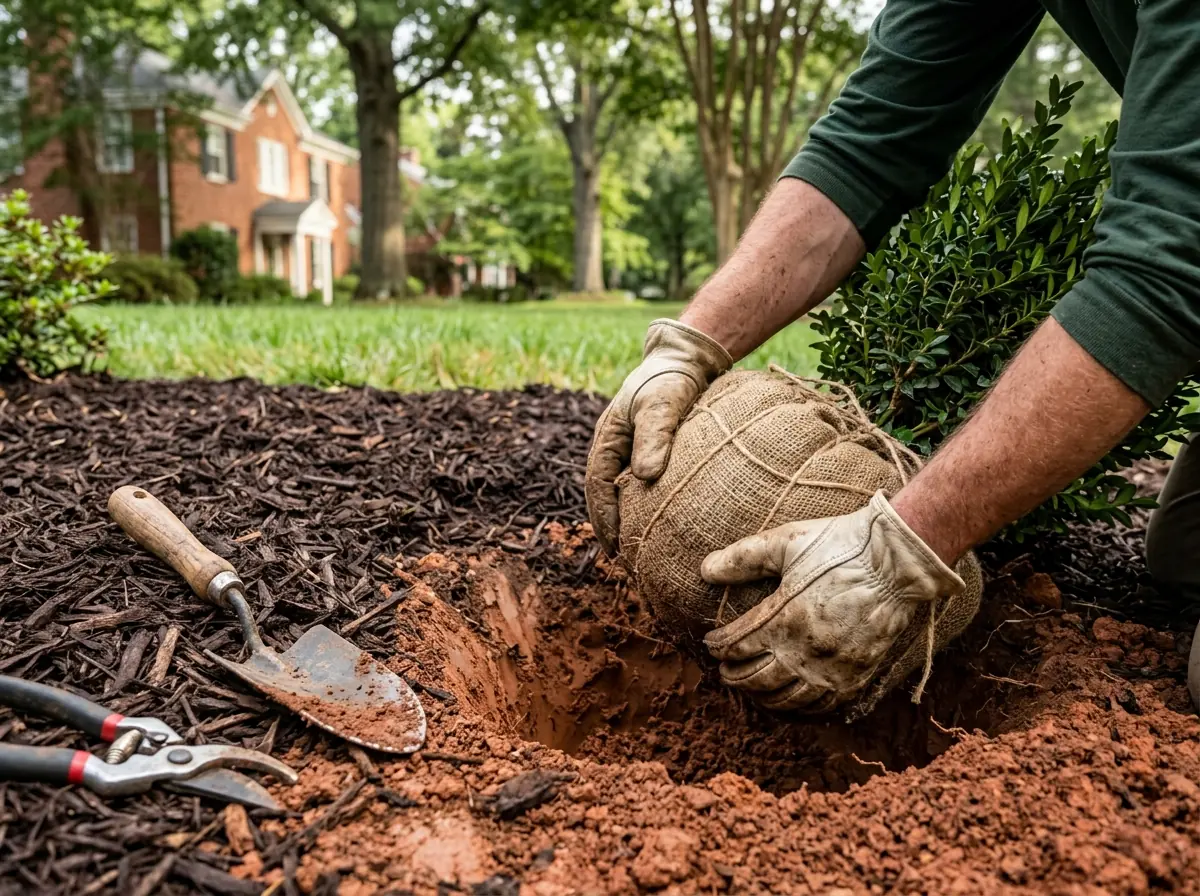
Boxwood
Common boxwood rates A with Rutgers and "rarely damaged" with Maryland. Its bigger risk is boxwood blight, which spreads on tools and debris. Our shrub and hedge trimming page covers the clean-tool routine.
Japanese Pieris
Japanese pieris, also sold as andromeda, is an evergreen shrub. Rutgers rates it A and Maryland rates it rarely damaged. Mountain pieris, a close relative, also rates A with Rutgers.
American Holly
American holly rates A on the Rutgers list and "seldom damaged" on Maryland's. It is native to Virginia, and the Digital Atlas of the Virginia Flora describes it as common in the Coastal Plain and Piedmont, the two regions that meet at Richmond.
Spicebush, Inkberry and Virginia Sweetspire
These three rate B with Rutgers: seldom severely damaged. Spicebush and inkberry also rate "seldom damaged" with Maryland. Spicebush is native and common throughout Virginia, according to the Digital Atlas.
Deer-Resistant Perennials, Ferns and Grasses
Daffodil
Rutgers A, Maryland rarely damaged.Russian sage
Rutgers A, Maryland rarely damaged.Lenten rose (hellebore)
Rutgers A.Lavender
Maryland rarely damaged. Rutgers has no rating for it, but it's on Virginia Cooperative Extension's deer-resistant list.Purple coneflower and butterfly weed
Both Rutgers B. Maryland rates coneflower rarely damaged.Ferns
All ten ferns on the Rutgers list rate A, including Christmas, cinnamon, hayscented, royal and sensitive fern. One exception: Maryland rates Japanese painted fern frequently damaged, where Rutgers rates it A.Native grasses
Switchgrass and Indian grass rate A with Rutgers, as do feather reed grass and fountain grass.
One grass to skip despite its A rating: Japanese silver grass (Miscanthus sinensis). The Plant RVA Natives guide lists it among invasives of particular concern, and from January 2027 Virginia law requires retailers selling it to post signs identifying it as invasive.
Plants Deer Eat First
Rutgers rates these D, frequently severely damaged:
Hosta
Rutgers D and Maryland frequently damaged.Tulip
Rutgers D.American arborvitae
Rutgers D and Maryland frequently damaged.Yew
Rutgers D and Maryland frequently damaged.Pinxterbloom azalea
Rutgers D. Maryland rates evergreen azaleas and rhododendrons frequently damaged too.
Maryland also rates Leyland cypress, English ivy and daylily frequently damaged, where Rutgers puts them a step lower at C. Hydrangeas, mountain laurel, redbud and flowering dogwood all rate C with Rutgers. They can work in a deer yard, but only with protection or in a spot deer don't reach.
Fences, Repellents and Placement
Plant choice lowers the odds; the other tools cover the gap. Virginia Cooperative Extension's guide to deer in the garden sets out the options: accept some damage, choose resistant plants, fence, pick the site carefully, use scare devices and apply repellents. It also says few options guarantee complete success.
Fences
Extension notes that deer can jump fences up to 8 feet high. Double fences, reflective material and banners can make a lower fence more effective. Electric fencing may be prohibited by local ordinance, especially in cities and towns, so check before building one.Repellents
Deer can get used to a repellent within two to three applications, so rotating products keeps them working. Most must be reapplied after rain, and Extension warns that one missed application can wipe out a season's work.When repellents fail
Deer ignore deterrents when the plant is a favorite food or when other food is scarce. Protect hostas and arborvitae early in spring and again in hard winters.Placement
Extension notes that deer browse only up to about 6 feet off the ground, and that plants right next to the house are less likely to be bothered. Following that, put the deer favorites by the front steps and the resistant shrubs at the edge of the lot.
Native Deer-Resistant Plants for Richmond
If you'd rather plant natives, the University of Maryland keeps a separate list of native plants that "usually do not suffer significant browsing damage." Several of them are confirmed natives in the Digital Atlas of the Virginia Flora as native to Virginia: little bluestem, Christmas fern, American holly and spicebush. The Maryland list also includes switchgrass, wild bergamot and waxmyrtle. It adds its own caution: when deer are overpopulated, even plants on the list get browsed. For more native choices by site, see our guide to Virginia native plants for Richmond yards.
Why Richmond homeowners call Richmond Elite Landscaping
- Free on-site estimate
- Scope, materials and price in writing before work starts
- Utility lines marked through VA 811 before digging
- One local landscaping contractor, not a call list
- No charge to homeowners for the referral
Planting a Deer-Resistant Bed in Richmond
We pass your request to one independent local landscaper, who comes out to look at the yard, quotes the planting and does it.