
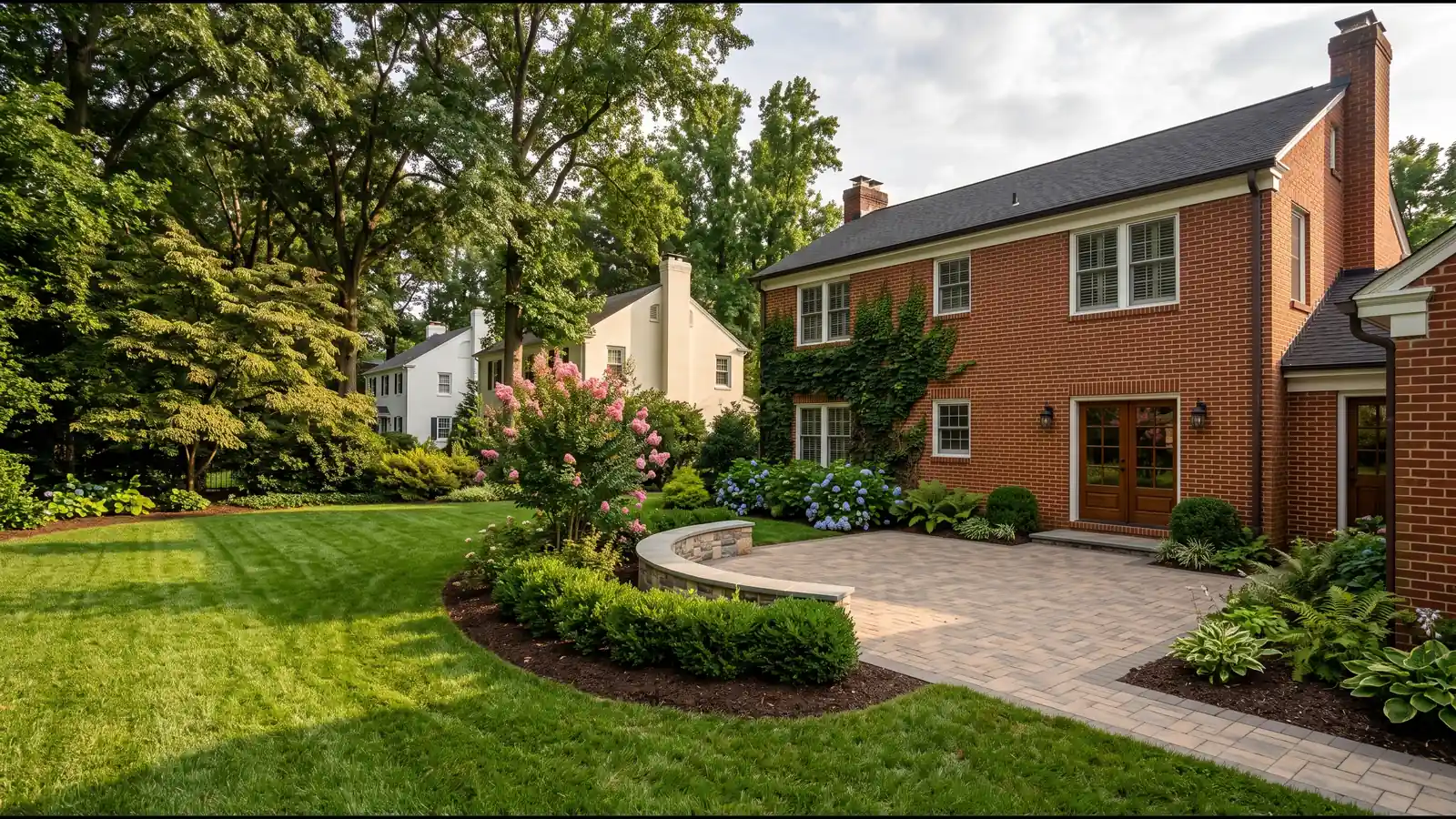
Best Grass Seed for Richmond: Turf-Type Tall Fescue
Virginia Tech's 2025 guide to choosing turfgrass sorts the state into regions. For the Southern Piedmont and the Coastal Plain, it names tall fescue and tall fescue/Kentucky bluegrass mixtures as the best-adapted cool-season grasses, with zoysia and cold-tolerant bermudagrass as the warm-season options. Richmond sits on the Fall Line where those two regions meet, so either description fits your yard.
Tall fescue has the deepest root system of the cool-season lawn grasses grown in Virginia, which is what gets it through a dry August. It avoids drought well, germinates in 4 to 7 days, greens up early in spring, tolerates moderate shade and grows in a wide range of soils, from Piedmont clay to Coastal Plain sand. The same guide lists its weaknesses: it needs frequent mowing, it does little to repair itself, and brown patch disease has long been a problem, with gray leaf spot a newer concern.
Turf-Type Tall Fescue vs. Kentucky 31
Not every bag labeled "tall fescue" is lawn seed. Purdue University's turf program points out that older, wider-bladed forage types such as Kentucky 31 are still sold and can become weeds in a lawn, showing up as coarse clumps that green up earlier than the grass around them. The turf-type varieties bred since then have a finer blade and grow much denser. When a bag lists only the species and not a variety name, you can't check it against the Virginia list below.
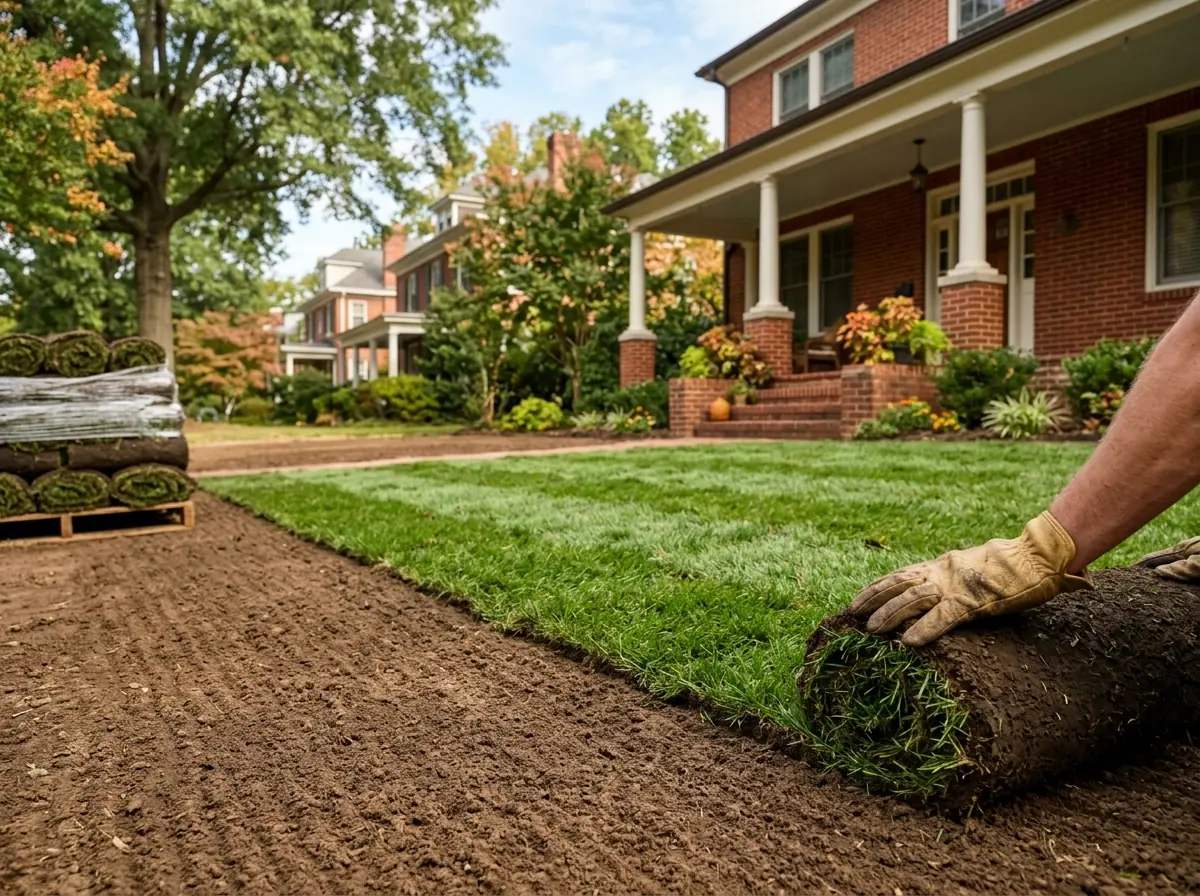
Tall Fescue and Kentucky Bluegrass Mixes
Virginia's sod farms have long grown a mix of 90% turf-type tall fescue and 10% Kentucky bluegrass by weight. By seed count, that works out to about half and half. Virginia Tech says the mix has held up well across the state. Seed mixes are sold at 95:5, 90:10 and 85:15. The bluegrass spreads sideways and will gradually take over, so an 85:15 mix turns bluegrass-dominant sooner and needs more care. A 90:10 mix is the middle ground: the bluegrass fills small gaps that pure tall fescue, a bunch-type grass, leaves bare.
Types of Grass in Virginia Compared
Virginia Cooperative Extension lists Kentucky bluegrass, tall fescue, perennial ryegrass and the fine-leaf fescues as the main cool-season lawn grasses, and bermudagrass and zoysiagrass as the main warm-season ones. Here's how they compare for a Richmond yard.
Tall fescue
Best all-round choice here. Moderate shade tolerance, deepest roots of the cool-season group, 4-to-7-day germination. It doesn't spread, so bare spots need reseeding.Kentucky bluegrass
Spreads sideways and fills gaps, but has poor shade tolerance, takes 10 to 14 days to germinate and survives heat by going dormant. Virginia Tech rates its maintenance needs high. Best used as the 10% in a tall fescue mix.Fine fescues
Creeping red, chewings and hard fescue have the best shade tolerance of the cool-season grasses. They handle traffic poorly, especially in heat and drought, and don't tolerate poorly drained soil.Bermudagrass
A full-sun, warm-season grass with poor shade tolerance. Common bermudagrass can be seeded; hybrid types are planted only as sprigs, plugs or sod.Zoysiagrass
Takes more shade than bermudagrass but spreads very slowly, so most zoysia lawns start from sod, which costs more than establishing bermudagrass.
Both warm-season grasses go dormant after repeated frosts and lose their green color for four to five months, from late fall to early spring. Dormant turf still covers the ground, but it won't look like a lawn in February. Extension notes that St. Augustinegrass, mainly a southeast Virginia grass, has lawns "as far west and north as the Richmond area," which puts Richmond at the edge of its range.
Grass Seed for Shade in Richmond
Under the big shade trees of an older Richmond neighborhood, fine fescue is the seed to try. Virginia Tech says the fine fescues have the best shade tolerance of the cool-season grasses. They can be mixed with Kentucky bluegrass and perennial ryegrass for yards that are part sun and part shade, and over time the fine fescue takes the shady spots while the other grasses hold the sunny ones. Tall fescue is only moderately shade tolerant, and bluegrass is poor in shade.
Fine fescue has two limits that matter here. It wears out under foot traffic, and it doesn't tolerate poorly drained soil. For shade where grass won't hold, our guide to Virginia native plants covers shade ground covers such as Pennsylvania sedge.
Buying Seed: The Virginia Turfgrass Variety Recommendations
Virginia Tech publishes a new Virginia Turfgrass Variety Recommendations list every year. The 2025-26 edition, SPES-727NP, came out in August 2025. A Maryland-Virginia work group reviews the previous year's National Turfgrass Evaluation Program trials, run in Blacksburg, Virginia Beach and College Park, Maryland. A variety has to perform well for at least two years to be listed as "promising" and three years to be "recommended." It must also be sold as certified seed.
For tall fescue, recommended and promising varieties can make up 90 to 100% of a mix by weight.
Check the variety names
The bag's label lists each variety and its share by weight. Compare them with the current edition of the list, not an old printout, and buy certified seed.Sod follows the same list
Virginia Crop Improvement Association certified sod has to be grown from varieties and mixtures on the list, and each load comes with a certified sod label.
When to Plant Grass Seed in Richmond
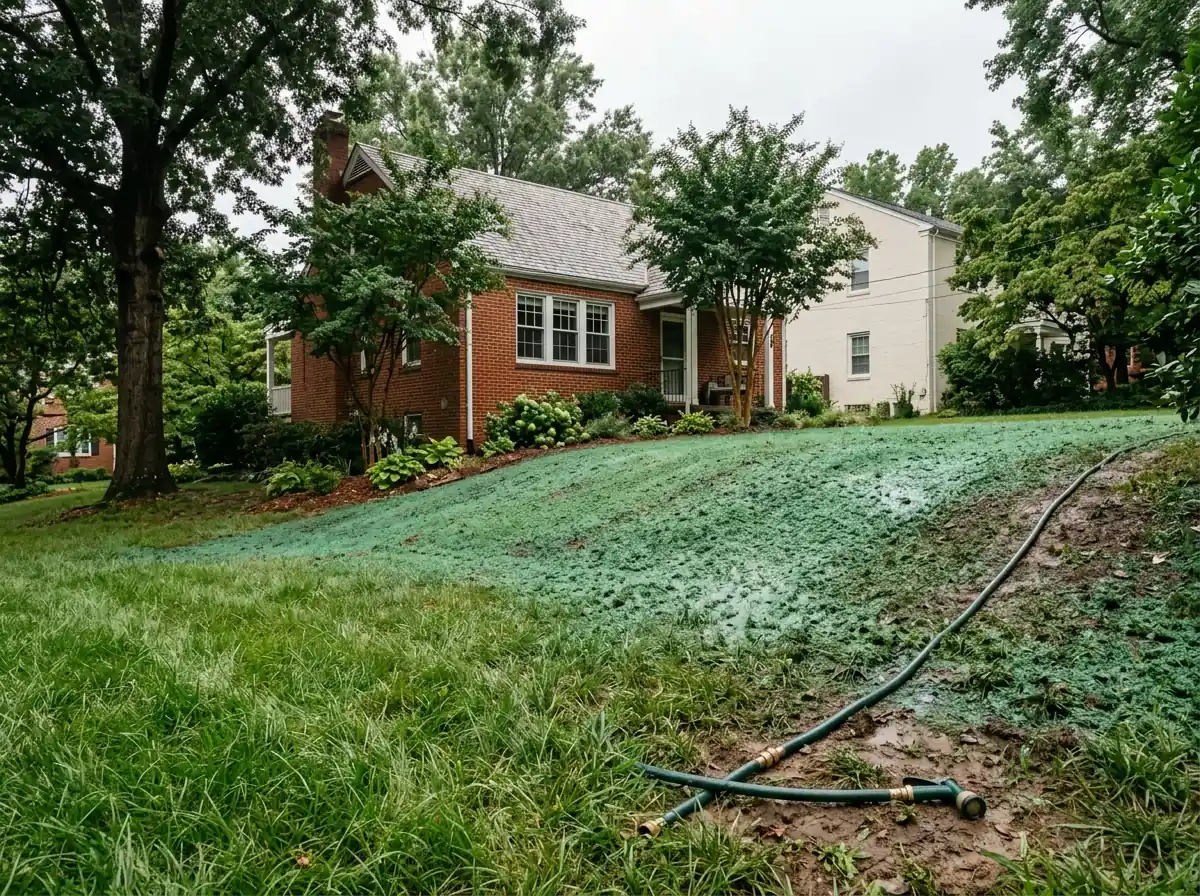
Tall Fescue and Other Cool-Season Seed
Late summer to mid-fall is the best time to seed cool-season grass in Virginia, with September and October preferred. Richmond's first fall freeze comes around November 4 in a typical year, so seed sown in September has several weeks to root before the first freeze.
Spring is Extension's second-best window, and it comes with a catch. The crabgrass preventer many lawns get in March or April can also stop grass seed from germinating, and Extension's calendar says to consider how a pre-emergent will affect future seeding before applying it. Virginia Tech weed scientists found siduron to be the most accepted herbicide for spring-seeded tall fescue, and in their trials mesotrione controlled smooth crabgrass without injuring tall fescue. Follow the product label. Our crabgrass control guide covers the timing.
Bermuda and Zoysia
Extension's warm-season calendar marks May and June as the best planting months, with July second best. Sod can be laid any time the ground isn't frozen, as long as you can water it.
How Much Grass Seed You Need
Virginia Cooperative Extension's seeding rates for a new lawn, per 1,000 square feet:
Tall fescue
6 to 8 pounds.Kentucky bluegrass
2 to 3 pounds.Perennial ryegrass
4 to 6 pounds.Fine fescues
3 to 5 pounds.
Overseeding an existing lawn takes less. A Prince William County Extension handout gives a minimum of 2 to 3 pounds per 1,000 square feet for a thin lawn, and 4 to 6 pounds for a renovation where weeds cover more than half the ground. A 5,000 square foot front and back yard needs 30 to 40 pounds of tall fescue for a new lawn, but closer to 10 to 15 pounds for an overseeding.
Seed does best on soil that's been tested. The Virginia Tech Soil Testing Lab's routine test costs $10 and tells you how much lime and fertilizer the seedbed needs.
Why Richmond homeowners call Richmond Elite Landscaping
- Free on-site estimate
- Scope, materials and price in writing before work starts
- Utility lines marked through VA 811 before digging
- One local landscaping contractor, not a call list
- No charge to homeowners for the referral
Seed, Sod or Overseeding in Richmond
If the lawn is mostly bare clay or weeds, a renovation or sod may be the better route. If it's thin but alive, fall aeration and overseeding with varieties from the Virginia list is the lighter option. We pass your request to one independent local lawn installer, who looks at the yard and quotes the work.